
If one looks for “contemporary” Christian Christmas songs, there will be a number listed in a web search. The problem for many folks is that they usually don’t “sound” like Christmas! We have grown up hearing and singing beautiful traditional Christmas melodies from childhood, and they have become part of our “Christmas DNA.” Though newer songs can be fine compositions musically and textually, will they ever replace “Silent Night,” “Joy to the World,” and “Hark! the Herald Angels Sing?” Probably not, or should we say, we hope not!
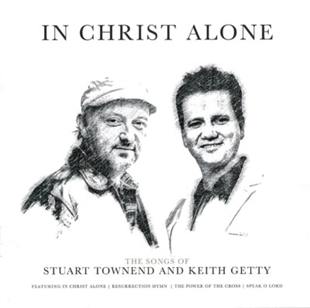
And yet there are some newer Christmas songs that might in time reach that classic status. One such song is probably going to turn out to be “Joy Has Dawned upon the World,” written in 2004 by Keith Getty and Stuart Townend. The Getty music team has performed it regularly in their Christmas concerts, including from New York City’s famed Carnegie Hall. It is included in their Christmas CD and can be found by multiple performers in You Tube videos. If your congregation wants to learn a new contemporary Christmas song, you can’t find one better than this. Make it your December “Hymn-of-the-Month.”
Keith Getty (b. 1974) and his wife Kristyn, the primary soloist in their concerts and CDs, have become very well-known throughout the English-speaking world over the last 25 years. They are the primary Christian hymn-writers of the 21st century. They write and perform songs with great substantial doctrinal content, and with an Irish flair in the music that almost makes one want to wear green (the color of “The Emerald Isle”). Their first great “hit” was “In Christ Alone,” which has been the number one hymn across the US and the UK. It was written in 2001 by Keith along with fellow Irish singer and song-writer Stuart Townend (b. 1963).
The Getty music team has now become even more well-known through their annual Sing! conferences each September (with thousands of attendees in person and on-line). And now they have achieved even greater ministry success through the Sing! Hymnal, released to the public in the fall of 2025. It is becoming perhaps the most widely-used hymnal in evangelical churches across America. It combines the best in classic hymnody through the centuries along with quality contemporary selections from their own team as well as other sources. And it includes significant readings to include in a well-structured worship service.
The wonderful new songs from the Gettys includes works by other musicians and authors who are part of their team. These include “the three Matts:” Matt Merker, Matt Boswell, and Matt Papa, as well as others. From them have come such songs as these: “He Will Hold Me Fast,” “Beneath the Cross,” “By Faith,” “The Power of the Cross,” “Speak, O Lord,” “Holy Spirit, Living Breath of God,” “Facing a Task Unfinished,” “Lift Hgh the Name of Jesus,” and “Christ Our Hope in Life and Death.”
“Joy Has Dawned upon the World” is number 762 in the Sing! Hymnal. In the collection of brief “Hymn Stories” in the rear of the hymnal, Keith has written this about that particular song.
Stuart Townend and I wrote this hymn back in 2004. Stuart wanted to draw out parts of the Christmas story, such as the gifts of the magi, that are not particularly present in other Christmas hymns. Melodically, we wanted to give this carol the same feel people might expect from the classic Christmas songs they grew up singing in church.
The theme of joy is a major dynamic of the Christmas story, and indeed of the Christian faith. Luke tells us that the angels’ message to the shepherds was that of “good news of a great joy.” And Matthew tells us that when the Magi arrived, “they rejoiced with exceeding great joy.” How much joy must that have been?! That good news brings us great joy as well as we contemplate what it means for us that God has so loved the world, that He has given His only begotten, the greatest Christmas gift of all time.
And this Savior who was “in the beginning” (John 1:1) long before He took on human nature and human flesh in Bethlehem, is “very God of very God” (Nicene Creed). John MacArthur has written that “Christmas is not about the Savior’s infancy; it is about His deity.” The more we understand the biblical story, the more amazed we become at such love, and the more joy we have in the realization of what that love has accomplished for us. More than that, how great must our joy become when we consider what God has promised in our heavenly future for all who have put their trust in Jesus Christ. As we sing in another Christmas song (“While by the Sheep We Watched at Night”), “How great our joy!”
There is a progression from stanza to stanza, culminating in a great conclusion in stanza four as we step back and look at the bigger picture. Keith and Stuart lead us from one scene to the next, starting in eternity past, moving to the nativity and the key people involved in Jesus’ infancy, before doing what the Apostle John has done so uniquely and maturely in his Gospel … give us the theology behind it all.
Stanza 1 sings of God’s promise of “salvation now unfurled.” The imagery of dawn is very fitting, since the first rays of the gospel sun began appearing on the horizon in the Garden of Eden when, in Genesis 3:15 and 16, God promised that the seed of the serpent would bruise the heel of the seed of the woman, but that the seed of the woman would crush the head of the seed of the serpent. Through the millennia of Old Testament history and revelation, that story would unfold one step at a time, like the rays of the sun at dawn gradually filling the sky until that brilliant orb rose in the heavens in its full glory. But one of the characteristics of the gospel, well expressed in Mary’s “Magnificat,” is the way God works in ways that so opposite from what the world would have expected. No human palace would welcome Jesus, but only a stable. No earthly monarchs would bow at His cradle, but only country shepherds. No earthly glory would welcome His coming, but only the love of a humble teenage virgin.
Joy has dawned upon the world,
Promised from creation:
God’s salvation now unfurled,
Hope for every nation.
Not with fanfares from above,
Not with scenes of glory.
But a humble gift of love:
Jesus born of Mary.
Stanza 2 sings of “the songs of angels” that night in the skies over Bethlehem’s fields. Our reaction should be that of wonder that all this has actually taken place. The contrasts continue to be expressed with simle poetic beauty. A “mighty Prince of Life” is sheltered in a common stable. “Hands that set each star in place” (which Jesus did as Creator … placing every one of those countless billions upon billions of stars in exactly the right place, separated from each other by unimaginable vast distances – millions of light years apart!) were then tiny hands clinging “to a mother’s breast, vulnerable and helpless.” And He would become even more vulnerable and helpless when nailed to a cross and placed in a tomb, until, that is, He rose in powerful sovereignty having conquered death and Satan.
Sounds of wonder fill the sky
With the songs of angels,
As the mighty Prince of Life
Shelters in a stable.
Hands that set each star in place,
Shaped the earth in darkness,
Cling now to a mother’s breast,
Vulnerable and helpless.
Stanza 3 sings of the other actors in the story: the shepherds and the wise men. Herod and Caesar would not bow (at least, not yet), but shepherds and wise men did. And what a contrast here. On the one hand were Jewish shepherds, people regarded as ceremonially unclean and excluded from proper social interaction. And on the other hand were Gentile wise men (perhaps scholars and philosophers from areas near Babylon), people regarded as being at the pinnacle of their society and culture. Keith and Stuart were able to pack much into this one stanza, including the likely significance of the gifts they brought: gold for royalty (a King), incense for deity (God with us), and myrrh for priesthood (His death will make a way). We have not been saved by the straw at Bethlehem, but by the blood at Calvary.
Shepherds bow before the Lamb,
Gazing at the glory;
Gifts of men from distant lands
Prophesy the story.
Gold, a King is born today,
Incense, God is with us,
Myrrh, His death will make a way,
And by His blood He’ll win us.
Stanza 4 sings of the grand theology of reconciliation accomplished by “Christ our mighty Champion.” Our Christmas celebrations should always rise higher than sleigh bells and reindeers, and even higher than angels and shepherds. Our contemplations and worship should rise to the theology of God’s magnificent plan to redeem a people for His own possession and to lift the name of Jesus higher than any name, so that at the name of Jesus, every knee will bow, both in Heaven and earth, and every tongue profess that He is Lord. In an opening phrase, the authors include a double nomenclature of Jesus as both “Son of Adam” and “Son of heaven.” The song proceeds to refer to the great terms ransom and reconciliation, we rise to look at Bethlehem not from 500 feet but, as it were, from 50,000 feet. This happens in the traditional British Christmas “Festival of Nine Lessons and Carols.” The first eight lessons come from Old Testament prophecies (like Isaiah) and then New Testament fulfilment (in the synoptic Gospels). But the ninth lesson comes from the Gospel of John, which explains the grand theme of redemption with the deepest and highest reflection. Giving substantially less space to the events of Jesus’ earthly ministry (His miracles and parables) in favor of fewer occasions but much longer presentations of Jesus’ own words explaining what all these things meant. This “babe of Bethlehem” is “now the Lord of history.”
Son of Adam, Son of heaven,
Given as a ransom,
Reconciling God and man,
Christ our mighty Champion.
What a Savior, what a Friend,
What a glorious mystery:
Once a babe in Bethlehem,
Now the Lord of history.
With newer songs like these, don’t forget to honor the “owners” by including the appropriate copyright information. The words and music are the property of the copyright holders. Having a license (as from Song Select or CCLI) may grant you permission to print copies without charge (never make copies without some kind of permission, as with these licenses). But even when printing with permission, be sure to include the copyright information. Part of the reason for that is so that others will know that they cannot make copies of your copy unless they also have a license that permits them to do so. To fail to do these things involves theft, not only a criminally prosecutable offense (with potentially large monetary fines), but also is a violation of the eighth commandment in God’s sight.
Stuart Townend & Keith Getty Copyright © 2004 Thankyou Music (Adm. by CapitolCMGPublishing.com excl. UK & Europe, adm. by Integrity Music, part of the David C Cook family, [email protected])
Here is a link to the song as performed in a concert with the Getty music team. It is combined with the traditional carol “Angels We Have Heard on High.”