
When most people think about Christmas music, they seldom think about Johann Sebastian Bach (1685-1750). But this greatest of all church musicians has given us a large amount of wonderful music to celebrate the Savior’s birth. These include not only organ chorales on Christmas hymns (several can be found in his “Orgelbüchlein” – “Little Organ Book,” with which all organists are very familiar), but also large works like his “Christmas Oratorio” and his “Magnificat” (Mary’s song, found in Luke 1).
One of those Christmas songs that is found in hymnals today is “O Jesus Sweet, O Jesus Mild.” The words come from an author several decades before Bach’s birth. But the music which he has arranged for the text has given longevity to the hymn. Bach drew from a musical composition by an earlier German Lutheran musician, Samuel Scheidt, an organist and teacher and prolific composer of the early baroque period. As arranged by Bach, the combination of words and music have the feel of a lullaby, with a rocking “beat” that gives the impression of a cradle swaying back and forth.
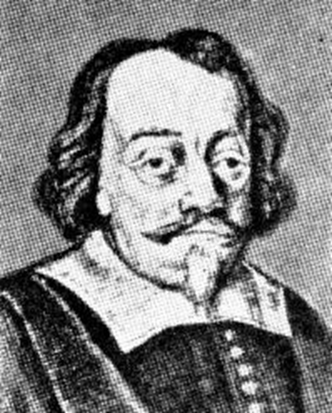
The original German text comes from Valentin Thilo (1607-1662). His father was born in Zinten and became deacon of the Altstadt Church in 1603. He died of the pestilence at Königsberg in 1620. His son Valentin was born at Königsberg. He matriculated in 1624 at the University of Königsberg as a student of theology, but devoted himself more especially to the study of rhetoric. When the Professor of Rhetoric, Samuel Fuchs, retired in 1632, he recommended Thilo as his successor. The post was, at Thilo’s desire, kept open for two years, during which he pursued his studies at the University of Leyden. On returning to Königsberg, he graduated M.A. there on April 20, 1634, and was thereafter installed as Professor of Rhetoric. During his 28 years’ tenure of office, he was five times elected as dean of the Philosophical Faculty, and twice as Rector of the University. He died at Königsberg, July 27,1662.
Thilo was a great friend of Heinrich Albert and of Simon Dach, and was with them a member of a circle of poets known as the Königsberg Poetical Union. He must have been especially gifted in rhetoric as he was the author of two textbooks on rhetoric, published in 1635 and 1647, as well as a number of separately printed occasional poems. His hymns were almost all written for various festivals of the Christian year. They are as a rule short and vigorous.
The first stanza of the German text for this hymn was translated by Geoffrey W. Daisley (1877-1939), about whom virtually nothing is recorded. The second and third stanzas were translated into English by Frieda Emilie Pietsch Priebbenow (1904-1982). She was born in Murtoa, Victoria, Australia to Paul Johannes Pietsch and Anna Elizabeth Pietsch. One of nine children, she grew up on a farm called Pleasant View in the Wimmera District of Victoria, in Kewell North. She attended the Lutheran Day School where she studied the Holy Bible and grew to love studying scripture. In 1928, she moved with her brother, an ordained Lutheran pastor, to St. Paul’s Lutheran Church, Greenwood, Queensland, where she served as his housekeeper. She met and married a farmer at her brother’s church, Johann (John) Hermann Priebbenow. He was the organist at St. Paul’s Lutheran Church in Greenwood.
Frieda’s two hymn translations were published in “The Australian Lutheran,” the periodical of the Evangelical Lutheran Synod in Australia (later Evangelical Lutheran Church of Australia). “O Jesus So Sweet, O Jesus So Mild,” her translation of “O Jesulein süss, O Jesulein mild” was printed in the December 20, 1932, issue. Her second hymn translation, a work by Friedrich Samuel Dreger (1798-1859) “Mein Schifflein geht behende” appeared as a five-stanza hymn beginning “My ship is deftly wending” in the February 17, 1933, issue. Because these hymns were published before she married, they appear under her maiden name. Her sons, Clarence and Harold, in emails and a letter dated February 3, 2009, and February 8, 2009, to the editor, Peter Reske, for the “Lutheran Service Book Companion to the Hymns” said that their mother had translated other hymns from German, but these have not been identified. Frieda Priebbenow died on July 20, 1982.
When we turn our attention to the music, we go first to the original composer, Samuel Scheidt (1587-1654). He was born in Halle, and after early studies there, went to Amsterdam to study with Jan Sweelinck, the distinguished Dutch composer, whose work had a clear influence on Scheidt’s style. On his return to Halle, Scheidt became court organist, and later Kapellmeister to the Margrave of Brandenburg. Unlike many German musicians, for example Heinrich Schütz, he remained in Germany during the Thirty Years’ War, managing to survive by teaching and by taking a succession of smaller jobs until the restoration of stability allowed him to resume his post as Kapellmeister. When Samuel Scheidt lost his job because of Wallenstein, he was appointed in 1628 as musical director of three churches in Halle, including the Market Church.
Scheidt was the first internationally significant German composer for the organ, and represents the flowering of the new north German style, which occurred largely as a result of the Protestant Reformation. In south Germany and some other countries of Europe, the spiritual and artistic influence of Rome remained strong, so most music continued to be derivative of Italian models. Cut off from Rome, musicians in the newly Protestant areas readily developed styles that were much different from those of their neighbors.
Scheidt’s music is in two principal categories: instrumental music, including a large amount of keyboard music, mostly for organ; and sacred vocal music, some of which is a cappella and some of which uses a basso continuo or other instrumental accompaniment. In his numerous chorale preludes, Scheidt often used a “patterned variation” technique, in which each phrase of the chorale uses a different rhythmic motive, and each variation is more elaborate than the previous one, until the climax of the composition is reached. In addition to his chorale preludes, he wrote numerous fugues, suites of dances (which were often in a cyclic form, sharing a common ground bass) and fantasias.
It is from Johann Sebastian Bach that we have the current harmonization of this tune, O JESULEIN SÜSS. He was born at Eisenach into a musical family, and in a town steeped in Reformation history. Throughout his career, he professed and demonstrated a strong belief in and commitment to the doctrines of the Reformation. His work conveys a deep personal faith in the Lord Jesus, both in the texts he chose and in the marginal scribblings which consistently included the letters J.J. (German for “Jesus, help”) and S. D. G. (“Soli Deo Gloria”). He received early musical training from his father and older brother, and elementary education in the classical school Luther had earlier attended.
Throughout his life he made extraordinary efforts to learn from other musicians. At the age of 15 he walked to Lüneburg to work as a chorister and study at the convent school of St. Michael. From there he walked 30 miles to Hamburg to hear Johann Reinken, and 60 miles to Celle to become familiar with French composition and performance traditions. Once he obtained a month’s leave from his job to hear Buxtehude, but stayed nearly four months, angering his employer! He arranged compositions from Vivaldi and other Italian masters. His own compositions spanned almost every musical form then known (opera was the notable exception). Today he is regarded not only as the greatest church musician of all time, but as truly a genius in composition.
In his own time, Bach was highly regarded as an organist and teacher, his compositions being circulated as models of contrapuntal technique. Four of his children achieved careers as composers. Haydn, Mozart, Beethoven, Mendelssohn, Schumann, Brahms, and Chopin are only a few of the best known of the musicians that confessed a major debt to Bach’s work in their own musical development. Mendelssohn began re-introducing Bach’s music into the concert repertoire, where it has come to attract admiration and even veneration for its own sake. The volume of Bach’s compositional work was extraordinary, especially considering his duties as a teacher and performer in Leipzig and the oversight of a large family (20 children!).
After 20 years of successful work in several posts, Bach became cantor of the Thomas-schule in Leipzig, and remained there for the remaining 27 years of his life, concentrating on church music for the Lutheran service: over 200 cantatas, four passion settings, a Mass, and hundreds of chorale settings, harmonizations, preludes, and arrangements for organ and other instruments. He edited the tunes for Georg Schemelli’s “Musicalisches Gesangbuch,” having contributed 16 original tunes. His choral harmonizations remain a staple for studies of composition and harmony. Additional melodies from his works have been adapted as hymn tunes.
The repeated phrase that is most arresting to our attention is the endearing expression, “O Jesus sweet, O Jesus mild,” repeated a total of six times in the hymn, both at the beginning and at the ending of each stanza. As the words are addressed to Jesus, they compromise a loving lullaby sung to Him in His infancy by the modern worshipper. As such, they would serve well as part of a Christmas Eve or Christmas Day service in our churches. While the atmosphere of the text and tune bring thoughts of children to mind, the hymn is anything but childish. While simple, it is still rich and profound in theology and devotion.
In stanza 1, we sing to Jesus about the marvel of His incarnation, coming down from heaven’s “ivory palaces” (Psalm 45:8) to take on human flesh for us sinners, and to experience the humiliation (Philippians 2:8) of birth of a lowly virgin in a cattle stall.
O Jesus so sweet, O Jesus so mild!
For sinners You became a child.
You came from heaven down to earth
In human flesh through human birth.
O Jesus so sweet, O Jesus so mild!
In stanza 2, we sing to Jesus about the marvel of His work of reconciliation between fallen mankind and a holy God. Sin has not only caused a separation to occur. It has also triggered the just anger of God, our Maker, to whom we are accountable. But the ransom paid by Jesus has “stayed” that anger.
O Jesus so sweet, O Jesus so mild!
With God we now are reconciled.
You have for all the ransom paid,
Your Father’s righteous anger stayed.
O Jesus so sweet, O Jesus so mild!
In stanza 3, we sing to Jesus about the marvel of His sanctifying and renewing grace which “fills the world which sin defiled.” Having made us His own, we joyfully give all that we own to belong to Him, trusting that He will “keep us faithful, strong, and true” to the end.
O Jesus so sweet, O Jesus so mild!
Joy fills the world which sin defiled.
Whate’er we have belongs to You;
O keep us faithful, strong, and true.
O Jesus so sweet, O Jesus so mild!
Here is a newer copyrighted English translation made by Mark Hunt in 1978, with ©InterVarsity Christian Fellowship, slightly altered in the 1990 “Trinity Hymnal.” The theology expressed in this translation is an improvement, replacing a few questionable phrases in the previous traditional version.
O Jesus, sweet, O Jesus mild,
Your Father’s will You have fulfilled.
From Heav’n above to earth You came,
And born as man You took our name.
O Jesus sweet, O Jesus mild.
O Jesus sweet, O Jesus mild,
Your birth the world with hope has filled.
Your death has ransomed our lost race,
For on the cross You took our place.
O Jesus, sweet, O Jesus mild.
O Jesus sweet, O Jesus mild,
We seek to do what You have willed.
All that we have comes from above;
Lord, keep us walking in Your love.
O Jesus sweet, O Jesus mild.
Here is a link to the singing of the hymn in German from Zurich.