
In Deuteronomy 33:27 we read that “the eternal God is your dwelling place, and underneath are the everlasting arms.” Everlasting arms! What wonderful imagery to convey a wonderful concept that gives believers such wonderful consolation in difficult times. It’s not just that God is there, but that He is supporting us through whatever hardship we may be experiencing. It reminds us of Jesus’ words in John 10 when He assured us that our heavenly Father holds us in His hands, and no one can pluck us out.
We live our lives by depending on Him in every dimension. We trust Jesus not just for salvation. We trust Him for everything. That dependence is also conveyed in the concept of leaning on the Lord for everything: for strength, for guidance, for peace, for understanding, for direction, for friendship, for comfort, for forgiveness, for insight, And in those ways we are to “trust in the LORD with all your heart, and do not lean on your own understanding. In all your ways acknowledge Him, and He will make straight your paths” (Proverbs 3:5-6).
We all know what it is to lean on someone. We lean on friends for companionship, for advice, for reassurance, for support, for acceptance, for empathy, and for counsel. Whoever it is that we have chosen to trust needs to able and willing to be worthy of the trust we have placed in them. The Lord has invited us to do so, and has consistently shown Himself to be the most trustworthy being in the universe. It doesn’t mean that we will always understand His work in the short term, but the end line is set. Romans 8:31-39 assures us that nothing in all creation will be able to separate us from His love.
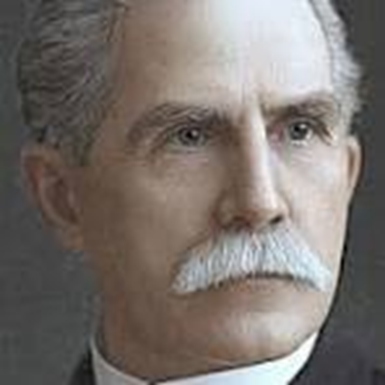
Is there a hymn about leaning on those “everlasting arms?” There sure is! It is the 1894 hymn “Leaning on the Everlasting Arms” by Elisha Albright Hoffman (1839-1929). Those words come directly from God’s Word in Deuteronomy 33:27. The hymn’s author was born in Orwigsburg, Schuylkill County, Pennsylvania to Francis A. and Rebecca A. Hoffman, who were both of German descent. His father worked as a minister in the Evangelical Association for over 60 years, which likely influenced Hoffman’s decision to enter the ministry.
Hoffman’s musical education was obtained from his parents. While possessing natural musical abilities, Hoffman never attended a school of music. Any musical instruction Hoffman received came from his experiences at his father’s church or at home.In addition to singing at church, the Hoffman household had a daily family worship time, of which hymn singing was an important part.Hoffman, therefore, became very familiar with the musical and spiritual tradition of Evangelical hymnody at a very early age. It was during these times of family worship that Hoffman developed a love for sacred music and a belief that song was “as natural a function of the soul as breathing was a function of the body.”
During the American Civil War, when Hoffman was 24, he enlisted as a private in the Union Army on July 9, 1863. He served with Company A, 47th Infantry Regiment, Pennsylvania. He was discharged just over a month later on August 14, 1863. Hoffman attended public school in Philadelphia and graduated from Central High School in the scientific course. After he finished high school, Hoffman attended Union Seminary in New Berlin, Pennsylvania, associated with the Evangelical Association. After receiving his degree from Union, Hoffman spent eleven years working with the Evangelical Association’s publishing house in Cleveland, Ohio. In 1866 at 26, Hoffman married Susan M. Orwig who was 22 at the time. Hoffman was ordained to Presbyterian ministry in 1873, at the age of 34.
Two years later in 1876, his wife, Susan died, leaving him a single parent of their three sons. In early 1879, at the age of 40, Hoffman was remarried to Emma, a woman who was 26 years old. The couple had a baby boy in December of that same year, adding to the family’s three other boys. At the time, they were living in Cleveland, Ohio, and had Hoffman’s sister-in-law living with them and working as a dressmaker.
Upon leaving his position with the Evangelical Association, Hoffman began his pastoral ministry. From 1880 until his retirement in 1922, Hoffman pastored several churches in Cleveland and Grafton, Ohio; Benton Harbor, Michigan; and Cabery, Illinois. His longest post was held at the Benton Harbor Presbyterian Church in Michigan where he served for 33 years. It was during these years in ministry that Hoffman composed the bulk of his hymns. In 1906, his daughter Florence married Barratt O’Hara who eventually served the state of Illinois as Lieutenant Governor (1913-1917) and as a Democratic U.S. Congressman (1949-1951 & 1953-1969).
At one time, there were over two thousand hymns composed by Hoffman in print. Among his most popular and widely recognized songs were: “What a Wonderful Saviour!” “Enough for Me,” “Are You Washed in the Blood,” “Leaning on the Everlasting Arms,” “No Other Friend Like Jesus,” “I Must Tell Jesus,” and “Is Your All on the Altar?” Hoffman also assisted in the compilation and editing process of over 50 different song books. Hoffman died on November 5, 1929, in Chicago, Illinois and was buried there in the Oak Woods Cemetery.
In the vast majority of his compositions, Hoffman was the author of both the words and music, though in this one the music comes from Anthony Showalter. In his compositions, Hoffman sought to create songs easily learned for congregational worship. According to Hoffman, a hymn is “a lyric poem, reverently and devotionally conceived, which is designed to be sung and which expresses the worshipper’s attitude toward God or God’s purposes in human life. It should be simple and metrical in form, genuinely emotional, poetic and literary in style, spiritual in quality, and in its ideas so direct and so immediately apparent as to unify a congregation while singing it.” Operating under this definition of a hymn, most of Hoffman’s compositions are metrically simple (3/4 or 4/4). As with the majority of hymns, Hoffman’s are also very simple in form, usually a collection of 8 or 16 bar stanzas separated by the return of a central refrain.
There are two names closely associated with this hymn. The refrain was the first part to be written, having been composed, both words and music, by Anthony Johnson Showalter. He sent that refrain to Hoffman, who added the three stanzas. The tune SHOWALTER is named after the composer of the music, who was born in Rockingham County, Virginia, on May 1, 1858, the son of John A. and Susanna Miller Showalter. Receiving his early music training from his father, he later attended several singing schools conducted by B. C. Unseld, Horatio R. Palmer, George F. Root, and F. W. Root. In 1880 he began teaching music and published that year his first book. In 1884 he moved to Dalton, Georgia, to establish a branch office of the Ruebush-Kieffer Music Co. of Dayton, Virginia, but shortly afterward founded his own publishing operation where he produced about sixty books of which it is said that more than two million copies were sold.
For more than twenty years Showalter edited a monthly periodical. He also produced the music for many other hymns and gospel songs, including the 1895 collection “In The Morning Of Joy” with words by Mrs. R. A. Evilsizer. For his music school in Dalton, he secured the services of the leading teachers in the nation, and he himself conducted singing schools in more than a dozen southern states, where he was widely respected as a hymn writer. In 1895 he spent a year studying music in England, France, and Germany. And in 1896 he co-edited “Gospel Praise,” a songbook published by the Gospel Advocate. He was a member of the Presbyterian Church in Dalton, Georgia, where he served as an elder and song director. His death occurred in Chattanooga, Tennessee on Sept. 16, 1924. So great has his impact been on gospel music that he was inducted into the Southern Gospel Music Hall of Fame in 2000, many years after he had passed away. He had such a huge impact in the time that he was alive.
In the “Handbook to the Mennonite Hymnary” (1949), editor Lester Hostetler provided Showalter’s first-person account of the creation of this hymn.
While I was conducting a singing-school at Hartsells, Alabama, I received a letter from two of my former pupils in South Carolina, conveying the sad intelligence that on the same day each of them had buried a wife. I tried to console them by writing a letter that might prove helpful in their hour of sadness. Among other Scriptures, I quoted this passage, “Underneath are the everlasting arms” (Deut. 33:27, KJV). Before completing the writing of the sentence, the thought came to me that the fact that we may lean on these everlasting arms and find comfort and strength, ought to be put in a song; and before finishing that letter, the words and music of the refrain were written.
The manuscript was sent to Elisha Hoffman, and in a few days his completion of the poem was received. Hostetler’s source for this account is unknown, Showalter being deceased 25 years prior to that. According to descendants of one of Showalter’s acquaintances, Showalter completed the song at the home of Isaac L. Magill (1839–1925) in Catoosa County, Georgia. One daughter, Myrtle Magill Stubblefield (1873–1949) passed down stories of “Showalter sitting in their parlor at the piano one Sunday afternoon after church services at Old Stone Church, pulling from his pocket words recently sent him from Hoffman and developing the melody to ‘Leaning on the everlasting arms.’ . . . Later that evening, they returned for church services, and the completed song was performed for the congregation.” The First Presbyterian Church of Dalton, Georgia, contends their church organist Mrs. W.J. Manly was one of the first to play it when “Showalter asked Manly to play the hymn to see if it was singable.”
As we sing the song today, it will be helpful to remember what prompted its composition and the source of the image in Deuteronomy 33:27, “The eternal God is your refuge, and underneath are the everlasting arms.” Showalter had this picture of these two people in such grief at having lost their wives, leaning on these everlasting arms, strong arms that we can lean on and find strength as we do so. This was the chorus that Showalter wrote for those two grieving men. They were obviously going through a time of difficulty, and he said: but you’re still safe, remember you’re still safe, you’re secure and held from all alarms and difficulties in life, because you are “Leaning, leaning, leaning on the everlasting arms.”
Stanza 1 tells us that we must first establish fellowship with God. We do so when we walk in the light by obeying His word (1 John 1:7, 2:3). Those who thus walk in the light have a joy divine (Philippians 4:4). They also have a blessed peace (Colossians 3:15).
What a fellowship, what a joy divine,
leaning on the everlasting arms;
what a blessedness, what a peace is mine,
leaning on the everlasting arms.
The refrain repeats the theme from Deuteronomy, driving home this imagery of “leaning,” specifically reminding us that it means we are ultimately “safe and secure from all alarms.” We know this doesn’t mean that we will never face any situations that will tempt us to fear, but that even in “the valley of the shadow of death,” His rod and staff will comfort us, and will safely delivery us home to glory.
Leaning, leaning,
safe and secure from all alarms;
leaning, leaning,
leaning on the everlasting arms.
Stanza 2 adds that we must continue to walk with God in the pilgrim way. We can walk together with God only as we stand in agreement with His will (Amos 3:3). Also, we must remember that it is a pilgrim way (1 Peter 2:11-12). But it is a path which grows brighter because it has the light of God’s word (Psalm 119:105).
O how sweet to walk in this pilgrim way,
leaning on the everlasting arms;
O how bright the path grows from day to day,
leaning on the everlasting arms. [Refrain]
Stanza 3 concludes that we must develop trust in God. When we truly trust in God, we will have nothing to dread or fear (Hebrews 13:5-6). Again, it is emphasized that one result of this kind of trust is blessed peace (Philippians 4:6-7). But to have this peace, we must have the Lord near us by drawing near to Him (James 4:7-8).
What have I to dread, what have I to fear,
leaning on the everlasting arms?
I have blessed peace with my Lord so near,
leaning on the everlasting arms. [Refrain]
Here is a link to hear the song performed in full “gospel music style” from a Gaither Music quartet.