
The Christian faith includes vast treasures of profound theological truths, from the deep mysteries of the incarnation to the incomprehensible dimensions of the relationships of the three persons of the Holy Trinity. And yet at its heart is a very simple message: that God has loved us and has given His only Son to die for us so that by faith in Him we might be saved. We embrace the majestic Christology of Colossians 1:17-23 as well as the beautiful soteriology of John 3:16. It has been said that “the gospel is like a river, broad and deep; shallow enough for a child to wade in, but deep enough for an elephant to swim in.” (Though often attributed to Augustine, the expression first appears in Gregory the Great’s commentary on Job.)
It is that simplicity which we find in many of the 19th century gospel songs that became favorites in Sunday School, and have continued to be loved into our own day. And it is a simplicity which does not sound condescendingly childish. As adults, we love to sing and be reminded of the basics. Sometimes it may seem that preachers want to come up with some new slant on a Bible passage or theme. But our hearts are thrilled by those foundational truths, even when they are expressed in words and phrases that we already know so well, and love to hear them over and over again.
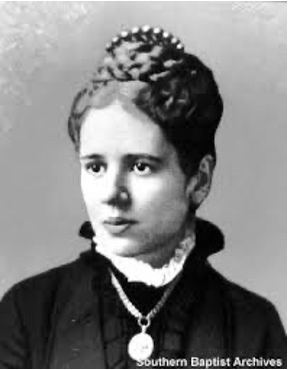
Such is the case with the gospel song “Tell Me the Old, Old Story,” written in 1866 by Arabella Katherine Hankey (1836-1911). Born in Clapham, England, the daughter of a wealthy banker, she was associated with the Clapham sect of William Wilberforce, a group of prominent evangelical Anglicans from the Clapham area. This group helped to establish the British and Foreign Bible Society, successfully promoted the abolition of the slave trade, and was involved in improving the lot of England’s working classes. Known to her family and friends as “Kate,” as a young adult, she dedicated her life to evangelism. When just eighteen, Hankey taught Bible classes for shop girls in London factories, visited the sick in local hospitals, and used the proceeds of her writings to support various mission causes. She is the author of this hymn, and also its “twin,” “I Love to Tell the Story” (1874).
As a result of a trip to South Africa to bring home an invalid brother, Kate became deeply interested in foreign missions, and to that cause she contributed all the royalties from her various publications in later years, including her “Bible Class Teaching” and many books of verses. One such work was a long poem on the life of Christ entitled “The Old, Old Story.” She made that trip to South Africa when in her early thirties, and while there became ill. Returning to England she spent her long recovery in London. During this period of her life in 1866 Kate wrote a fifty verse poem about the life of Christ. She divided the poem into two sections. The first section was called “The Story Wanted” and the second section “The Story Told.”
Upon her recovery, Major General Russell read Kate’s poem at an International Convention of the Young Men’s Christian Association. Sitting in the audience that day was Bishop William Doane (1832-1915). He was so impressed with the poem that he took some of the words from the first section and set them to music. Today they are sung in this hymn “Tell Me the Old, Old Story.” Ten months later, William G. Fischer heard the poem and fell in love with the second section. He took some of the words and composed the hymn “I Love to Tell the Story.” The two hymns together are often referred to as “The Sister Hymns.” After her recovery Katherine Hankey returned to Africa where with her brother she served as a missionary. During her last years, Kate Hankey was active in hospital visitation work at London. She died at Westminster in London, England, on May 9, 1911.
As for the occasion of her writing the hymn, she penned this brief explanation.
I wrote the first part toward the end of January 1866. I was unwell at the time, just recovering from a severe illness, and the first stanza really indicates my state of health, for I was literally “weak and weary.” When I had written the first part, which consisted of eight stanzas of four lines each, I laid it aside, and it was not until the following November that I completed the whole hymn.
Though the words of the hymn are simple, the construction is thoughtful. Each stanza tells us something about the Lord we need to know, and gives an added motivation to keep sharing the gospel. It may be an “old, old story,” but God’s power to save is undiminished. Supposed answers to the world’s problems, and to those of individuals, seem to many as plentiful as snowflakes in a blizzard. What we need, we are told, is better political leadership, more education, better medical services, effective pollution control, or maybe this self-help book, or that one. Many of these things can have some effect in improving life at an external or superficial level. But the real underlying problem of humanity is sin. Unless we are prepared to deal with that in an effective way, all the rest fall short.
The text is unusual in that it is not directed to the Lord, as a prayer or request. Neither is it just an expression of devotion spoken to one’s self, as in Psalm 103, “Bless the Lord, O my soul.” No, in this instance, as we sing the words, we are speaking to our Christian friends around us, asking that they continue to remind us of what the Lord has done for us and for our salvation.
Stanza 1 will be the desire of every saint this side of heaven … and on the other side as well! There is no greater story in all of human history than this story “of Jesus and His love.” It is a story “of unseen things above.” And yet the historical facts can be seen in the record of Scripture and also in the experience of hearts that have been born again, where “Jesus and His glory” and “Jesus and His love” are transforming us “from glory to glory” (2 Corinthians 3:18). The second half of this stanza reflects a beautiful reality, that we are each like “a little child” when it comes to needing to hear the story in terms simple enough for us to understand. Every one of us should be able to humbly and worshipfully acknowledge that we are “weak and weary, and helpless and defiled.”
Tell me the old, old story
Of unseen things above,
Of Jesus and His glory,
Of Jesus and His love.
Tell me the story simply,
As to a little child;
For I am weak and weary,
And helpless and defiled.
The refrain reinforces the importance and value of continuing to tell this wonderful story, one which will never grow “old” in the ears and heart of the redeemed.
Tell me the old, old story;
Tell me the old, old story,
Tell me the old, old story
Of Jesus and His love.
Stanza 2 further refines our desire, now to hear it told “softly, with earnest tones and grave.” This most likely reflects the condition of hearts, in that, though redeemed, we still carry too many of the effects of our old sinful nature, things that threaten to keep us from understanding and from grasping just how essential and valuable and glorious is this story. Being reminded of the story is something that will bring great comfort to us “in any time of trouble,” times when we may be tempted to wonder if we really are secure in the Lord’s care and if He has truly cleansed us from all our sin and unrighteousness.
Tell me the story softly,
With earnest tones and grave;
Remember I’m the sinner
Whom Jesus came to save;
Tell me the story always,
If you would really be,
In any time of trouble,
A comforter to me.
[Refrain]
Stanza 3 asks our friends to remind us that whatever the cost may be to us for embracing this glorious story, it will be worth it. That cost may be the loss of friends, the loss of advancement in career, fewer of this world’s rewards, all of which we will regard as “empty glory” in comparison to “the surpassing weight of glory” (2 Corinthians 4:17) that is ours when we possess Jesus, and He possesses us. Even if that cost should include hostility and persecution, we should not give in to fear. When those pressures and uncertainties arise, the remedy will be to listen once again to that old, old story, which assures us that “Christ Jesus makes thee whole.”
Tell me the same old story
When you have cause to fear
That this world’s empty glory
Is costing me too dear.
Yes, and when that world’s glory
Is dawning on my soul,
Tell me the old, old story,
“Christ Jesus makes thee whole.”
[Refrain]
Stanza 4 expresses the desire to hear this “story slowly, that I may take it in.” The unexpressed but likely reason is because of the soul-numbing effect of the remaining remnants of our sin nature. We need to stop and think in order to fully comprehend and appreciate spiritual things, surrounded as we are by a culture that considers such things as weightless and a waste of time. And then there is the additional request that it might be told to us often, because “I forget so soon,” with so many distractions that call for our attention during the day. The test likens our attention span to “the early dew of morning” that may last until breakfast, but hardly until noon!
Tell me the story slowly,
That I may take it in –
That wonderful redemption,
God’s remedy for sin.
Tell me the story often,
For I forget so soon;
The early dew of morning
Has passed away at noon.
[Refrain]
Originally, Kate provided her own melody for this hymn. However, a new tune (EVANGEL or OLD OLD STORY) was composed and the chorus added in 1867 by William Howard Doane (1832-1915). That year, as he was attending the International Meeting of the Y.M.C.A. in Montreal, Quebec, Canada, Major General Russell, commander of the English forces in Ireland, quoted Hankey’s poem and gave Doane a copy. One hot summer afternoon, while traveling home on a stagecoach between Glen Falls House and Crawford House in the White Mountains of New Hampshire, Doane set down the music. That night it was sung by his companions in the parlor of the hotel. First printed as sheet music, the song appeared later that same year in Doane’s “Silver Spray,” published at Cincinnati. Doane was a manufacturer, inventor, hymn writer, choral director, church leader, and philanthropist. He composed over 2,000 church hymns. More than seventy patents are credited to him for innovations in woodworking machinery.
Here is a link to a 30-minute video about the hymn.
Here is a link to the singing of three of the stanzas (though in a different order).