The Reason We Come to Worship and “Blessed Jesus, at Thy Word” (#276)

Why do you come to corporate worship on the Lord’s Day morning?  Many legitimate reasons could be offered, and we should be conscious of many of them as helpful, legitimate motivations that bring us together in the Lord’s House.  But among them must surely be the expectation and the desire that Jesus Himself would call us to Himself, would meet with us, would teach us from His Word and would make that Word effective in causing us to grow to maturity as sons and daughters of God.

Having ascended bodily into heaven, we do not expect the Lord to be physically present with us until He returns at the end of the age.  But He does meet with us spiritually through His Word. When it is read and preached, we hear Him speaking to us.  The Apostle Paul wrote in 1 Thessalonians 2:13,  “And we also thank God constantly for this, that when you received the word of God, which you heard from us, you accepted it not as the word of men but as what it really is, the word of God, which is at work in you believers.”
Continue Reading…

Posted in Hymn Study | Comments Off on The Reason We Come to Worship and “Blessed Jesus, at Thy Word” (#276)

The Opening of Worship and “Open Now Thy Gates of Beauty” (#275)

In a worship service, we are coming into the presence of God.  As we learn from Psalm 139: 9-10 (“if I take the wings of the morning and dwell in the uttermost parts of the sea, even there Your right hand shall lead me and Your right hand shall hold me”) and from Matthew 18:20  (“wherever two or three are gathered in My name, behold, I am there in the midst of them”), He is us with always, and we are never apart from Him, especially when we come into His house to worship Him.  And it’s what He promised in the Great Commission in Matthew 28:20 (“And behold, I am with you always, to the end of the age”).

But there is something unique about the corporate gathering of God’s people on the Lord’s Day.  He delights to come and meet with us to receive our adoration and hear our prayers.  The realization that we will be in the presence of the King of the universe should make a powerful impact on us, causing us to think twice before we arrive, so that our hearts are prepared to meet with Him.  In addition, it should cause us to be richly energized and filled with a special excitement as the service begins. 

We typically call the initial prayer an invocation, calling upon the Lord to come and meet with us to bless us with His presence through His Word, as it is read and preached to us and as we pray and sing it to Him.  But in a sense, He is already there when we arrive.  It’s not so much that we are invoking His presence, because He is already present, having called us and then waiting for us to come at His invitation.  In our invocation, what we are more accurately doing is asking Him to energize our hearts and minds so that we can more fully and consciously enter into His presence.

Continue Reading…

Posted in Hymn Study | Comments Off on The Opening of Worship and “Open Now Thy Gates of Beauty” (#275)

Feeding by Faith on Jesus and “Break Thou the Bread of Life” (#274)

The four Gospels are the inspired record of the three years of Jesus’ public ministry.  They focus on the last week, with almost one third of the narrative dealing with the last week, from Palm Sunday to Easter.  But John’s Gospel is quite unique among the four.  It was probably written almost 60 years after the synoptics ((Matthew, Mark, and Luke).  It includes far fewer specific events in Jesus’ life, and far more of Jesus’ teaching.  In fact, while red letter Bibles are not a particularly good idea, if we were to look at one of those in the Gospel of John, we would find that almost half of the Gospel text is in red!

John’s Gospel gives us much more in the way of doctrinal explanation of Jesus’ person and work: who He is and what He did and why He did it.  John only includes seven of Jesus’ many miracles, calling them “signs.”  And He includes the seven “I AM” statements that Jesus made.  These have been the subject of numerous books explaining their significance, and have also lent themselves to sermon series.   Each of them connects Jesus with a huge spiritual need in our lives, showing how He is able to meet that need for those who have placed their trust in Him.

Continue Reading…

Posted in Hymn Study | Comments Off on Feeding by Faith on Jesus and “Break Thou the Bread of Life” (#274)

World Communion Sunday and “According to Thy Gracious Word” (#273)

By the Lord’s design and according to the Lord’s will, Christian churches regularly celebrate the Lord’s Supper.  In the 20th century, it was common for church members to find this being offered only once each quarter, just four times a year.  By the 21st century, it was not unusual to find the Lord’s Supper once a month, or sometimes even each week.  This has happened, not just because of a desire to imitate the practice of the early church with frequent observation of the Lord’s Supper.  More often, it came about as a result of the very real spiritual benefit it brings to believers (as the Lord intended), and therefore a desire to make that available to church members more often than just once every three or four months.  

However often a local church might observe the Lord’s Supper, hopefully many will recognize that the first Sunday in October is known as World Communion Sunday.  This was first observed in 1933 at Shadyside Presbyterian Church in Pittsburgh, Pennsylvania.  It was initiated there by Rev. Hugh Thomson Kerr to unite Christian churches through a shared celebration of Communion.  It was adopted by the Federal Council of Churches in 1940 and became a worldwide event.  Today it is observed by churches of most major denominations.  It provides an opportunity for believers around the globe to have a sense of oneness in Christ that stretches across many cultural, geographic, language, and even doctrinal barriers.

Whenever the sacrament is observed, all hymnals provide rich musical resources for people to be focused that day on what Jesus accomplished for us in His atoning death.  Some of those will be in the hymnal section on the Lord’s Supper.  Others will be found in the topical section on the suffering and death of Christ. Since this historical event is such a central matter in the Christian faith, these are hymns with which a congregation should be familiar and with which there should be an ongoing effort to increase familiarity with this repertoire.

Continue Reading…

Posted in Hymn Study | Comments Off on World Communion Sunday and “According to Thy Gracious Word” (#273)

Ending the Day and “Savior, Breathe an Evening Blessing” (#272)

It would be a wonderful thing to begin and end each day in worship in our homes.  This was a pattern in the ancient monastic hours that included morning and evening set times, along with several other appointed times in the day.  The entire cycle of seven primary hours are Matins/Vigils (night), Lauds (dawn), Prime (sunrise), Terce (mid-morning), Sext (noon), None (mid-afternoon), and Vespers (sunset), followed by Compline (bedtime).  These hours form a cycle of praise and sanctification based on ancient traditions and were codified by the Italian Benedict of Nursia in the 6th century.  We need not adopt that entire pattern (which also included rising in the middle of the night for a brief time of prayer!), but morning and evening are certainly do-able and beneficial for believers of all ages. For centuries, protestant churches have adopted a small part of that pattern on the Lord’s Day, with morning worship before noon, and then evening worship in the late afternoon, even often calling that a vesper service.

But there has also been something of that pattern in private homes. In its simplest form, it is evident in individuals (or couples) rising early for a time of quiet worship, sometimes called devotions. This was found in a time of Bible reading, prayer, and even singing at family breakfast, and a similar pattern as families gathered for their evening meal. Such practices have a rich and long-standing history, especially in evangelical and reformed households.  There are wonderful scriptures that encourage a practice of personal and family piety.  And there are hymns that also point specifically to morning and evening worship, whether at home or in church services.  Those of us who grew up in churches with a Sunday evening service remember hymns like “Day Is Dying in the West,” “Abide with Me, Fast Falls the Eventide,” “Now the Day Is Over,” “The Day Thou Gavest, Lord, Is Ended,” and “Softly Now the Light of Day.”

Continue Reading…

Posted in Hymn Study | Comments Off on Ending the Day and “Savior, Breathe an Evening Blessing” (#272)

The Evil Around Us and “Christian, Dost Thou See Them” (#271)

The September 10, 2025 assassination of Charlie Kirk, founder and leader of “Turning Point USA,” has deeply shaken this country in a way unmatched by very many other events, coming just one day before the 24th anniversary of the 9/11 attack by Islamic terrorists.  At the young age of 31, Kirk had, for the last decade, had an enormous influence, especially on young adults – and particularly young men – as a promoter of conservative values. Speaking on college and university campuses across the US, Kirk’s announced theme was “Prove Me Wrong!”  He invited any who wanted to do so to come to the microphone and challenge him.  He was able to powerfully, and usually persuasively, counter their liberal views on a variety of topics, and to do so with impressive knowledge and respect and affection for these students.

What many, especially of an older generation, had not realized until after an assassin’s bullet took his life, was that he spoke with impressive eloquence and deep conviction, not just of his conservative political views (as a close ally of President Donald Trump – indeed the one primarily responsible for generating such great support for Trump among young adults in the 2024 election), but also of his gospel knowledge and personal faith in the Lord Jesus as his Savior.  His dominant themes included faith, family, and country, all related to a central theme of freedom (the word he wore on his shirt!).  He urged these students to stand up for traditional values on their liberal campuses, to get married and have children, and to get connected to a Bible-believing church. 

Continue Reading…

Posted in Hymn Study | Comments Off on The Evil Around Us and “Christian, Dost Thou See Them” (#271)

Sing! Hymnal and “Christus Victor” (#269)

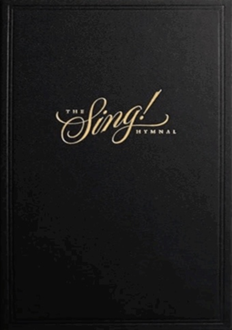
The 2025 annual national Getty Music Sing! Conference in Nashville, TN was a landmark event as their “Sing! Hymnal” was introduced to an enthusiastic gathering of nearly 8,000 church musicians and worship leaders.  Several years in the making, this will likely become the hymnal most often found in evangelical churches across America over the next couple of years.  This year’s conference had the theme, “Generation to Generation,” and that was evident in the structure and selections in this hymnal, designed to reach multi-generations.  The Getty team and their advisors and editors have chosen a wide sampling of hymns from all ages from centuries past to some of the newest compositions of the 21st century.

It will be a great tool to connect multi-generations at a time when many children, young people, and young adults have missed out on the opportunity to know such great hymns as “Crown Him with Many Crowns,” “All Hail the Power of Jesus’ Name,” “O for a Thousand Tongues to Sing,” and “Jesus, What a Friend for Sinners.”  At the same time, the hymnal has a rich sampling of newer hymns of several different styles from composers like the Gettys.  It also includes a healthy number of metrical Psalms for singing, a welcome emphasis to a historic practice that needs to be revived.

Continue Reading…

Posted in Hymn Study | Comments Off on Sing! Hymnal and “Christus Victor” (#269)

Self-Examination for Heart Health and “Searcher of Hearts, from Mine Erase” (#268)

Most people are very diligent when it comes to guarding the health of their hearts, especially as they age.  Regular checkups with their primary care physician, and maybe also their cardiologist, will sometimes lead to medications, exercise routines, and perhaps even surgery for ablations, valve replacements, or pacemakers.  But are we as diligent when it comes to guarding the health of our spiritual hearts?

Our spiritual forefathers, the English Puritans, made this a matter of top priority in the Christian life.  A favorite text for many sermons and books was Proverbs 4:23, “Guard the heart, for from it flow all the issues of life.”  In our day we discuss this dimension of sanctification under the title of “Spiritual Formation.”  It has become the subject of conferences and even of required courses in seminaries.

Speaking of doctrine, this is a good place to re-emphasize how important are both doctrine and life.  Paul wrote in 1 Timothy 4:16, “Keep a close watch on yourself and on the teaching.  Persist in this, for by so doing you will save both yourself and your hearers.”  All of us, not just pastors and teachers, need to be on guard, watching out for our own personal heart health (spiritual formation) – which involves sanctification, as well as watching out for the doctrines we embrace and teach – which involves especially justification.  The late J. I. Packer was a Christian author, theologian, and expert on the Puritans.  Someone asked him once in reference to what those Puritans thought, “Should one preach about doctrines?” to which Packer answered, “They would say, ‘Why, what else is there to preach?”’

Continue Reading…

Posted in Hymn Study | Comments Off on Self-Examination for Heart Health and “Searcher of Hearts, from Mine Erase” (#268)

Five Prayers and “Teach Me, O Lord, Thy Holy Way” (#270)

We are more dependent on the Lord than we will ever realize.  How wonderful that out of His great love, He provides for us in so many ways, and so much of the time when we’re not even aware of it. The Bible encourages us to call on the Lord continually to show His sovereign fatherly care for His children.  He loves us so much that He wants to bless us by entering into our lives to make our days full of joy.  His desire is more than just to save us from our sins and give us eternal life in heaven.  He wants for us to see each day that He is the one who finds great joy in meeting our every need.  Such is His glorious infinite goodness. We honor Him when we recognize that we need Him and therefore trustingly call on Him to meet those needs in our lives.

When it comes to hymns, we have ample resources to provide us the words to sing such longing musical prayers to Him.  We would immediately think of hymn phrases like “I need Thee, O I need Thee,” “guide me, O Thou great Jehovah,” “all I have needed Thy hand hath provided,” “all the way my Savior leads me,” and countless others.  They find great support in the many Psalms that remind us that God hears and answers prayer, such as in Psalm 34:17-18, “When the righteous cry for help, the Lord hears and delivers them out of all their troubles. The Lord is near to the brokenhearted and saves the crushed in spirit.”

Continue Reading…

Posted in Hymn Study | Comments Off on Five Prayers and “Teach Me, O Lord, Thy Holy Way” (#270)

The Horrible Love of Sinning and “Love Divine, All Loves Excelling” (#267)

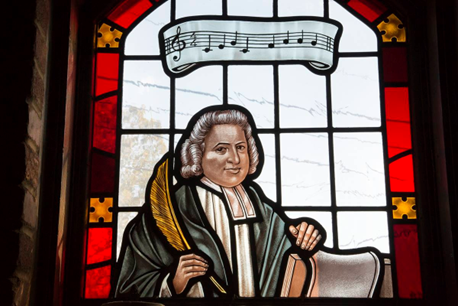
It would be almost impossible to find a hymnal that does not include a large number of hymns written by the 18th century Anglican minister and evangelist, Charles Wesley (1707-1788).  An amazingly prolific writer, he penned more than 9,000 poems of a spiritual nature during his lifetime, at least 6,500 of which are hymns.  He has justly been called “The Bard of Methodism.” What an incredible legacy to have left the church, with a body of hymnody that has been welcomed across denominational lines, well beyond the Methodist churches that grew out of his and his brother John’s preaching during the Great Awakening!

A substantial number of his writings were completed while riding on horseback to his evangelistic meetings. What really set Charles apart from other hymn writers was his effective use of scriptural allusions, providing a spiritual roadmap whereby individuals could imagine a Christ-centered life. Scholars suggest that he was able to compose about 10 lines of verse daily for 50 years. Charles’ brother John sometimes served as editor to his hymns. John’s typical response was, “some were good, some were mediocre, and some were exceptional.” John can also be credited with improving the singability of Charles’ hymns. Both John and Charles were instrumental in changing the spiritual environment of Britain during the 18th century. In doing so, they formed the bedrock of what Methodism has become worldwide. Their unwavering devotion to expressing Christian spirituality through hymns has impacted individuals across all denominational lines.

Continue Reading…

Posted in Hymn Study | Comments Off on The Horrible Love of Sinning and “Love Divine, All Loves Excelling” (#267)