
One way to gauge the spiritual health of a congregation (or a denomination … or a person) is to review the themes of sermons heard and digested over a period of time. This will be the result of what pastors have chosen to preach, what has been taught and published by seminary professors, and what books a person has chosen to read. For example, consider in your own church what themes have been most common and frequent on Sunday mornings. Even more telling, what themes have rarely if ever been touched on in a clear way from the pulpit.
In many cases in each of those three dimensions (local church, denomination, and individual) we will discover that there is a decidedly primary horizontal focus (sometimes to the exclusion of anything else!): our relationship with one another, being kind, forgiving, helpful, patient, etc. There is often a deficiency in the vertical dimension of our lives, our relationship with God, our spiritual health in His eyes, our hunger for Him, even themes of divine warning and judgment. The God too often proclaimed is not the God of the Bible, but one who is all love and mercy, a God who is never angered by the iniquity that boils up out of sinful hearts.
It will likely be the same pattern when one reviews the kind of books that have been read at home in the last year or two. Are they primarily books about how much God loves us and how secure we are in His saving grace? Those are wonderful and true themes, but that’s not the whole story that we find in the Bible. In His Word, God has given us an account of the reality, the power, and the wickedness of the sin that is in every human heart, with remnants of it remaining even in the heart of the redeemed, waiting for the day when we will be set free from its influence, either at the time when death delivers us into His presence in glory, or when He returns to usher in life in the new heavens and new earth. And we need to hear how to resist the temptations of that inner sin.
One of the safety benefits of preaching through books of the Bible (known as lectio continua) is that the preacher will be forced to address whatever comes next in the text, even if it’s not a theme that he finds most appealing. Thus, over a period of time, there will inevitably be a balance of themes from the pulpit, especially in regard to the things that we need to hear regularly for the health of our souls. And one of those too often neglected themes is the battle against sin within, the spiritual warfare Paul wrote about in Ephesians 6, and the ways we must be continually putting off the old, by the renewing of our minds, and putting on the new (Ephesians 4:22-24).
When we consider the pattern of sermons and literature in church history, we find not only that balance, but especially that dominance of a spiritual struggle. That is a pattern that is quite unlike what dominates the preaching in many circles today. In the past, not only did preachers regularly address the doctrine of sin, but also the disciplines of the Christian life for dealing with it on a daily basis. Christian literature available to us from the Puritan era sounds strange to us, since we are not so frequently confronted by it. Think of books from publishers like The Banner of Trust, books like Thomas Brooks’ “Precious Remedies Against Satan’s Devices” and John Owen’s “The Mortification of Sin.” And of course, we cannot fail to mention the massive (in size as well as value) William Gurnall’s classic “The Christian in Complete Armor” (which is the greatly shortened version of its full title!). Today we have excellent resources like Kevin DeYoung’s “The Hole in Our Holiness” and Stuart Scott’s “Killing Sin Habits,” as well as the modern language versions of John Owen’s classics on personal holiness from Kelly Kapic (HIGHLY recommended!). This is a subject about which one will find significant resources with an on-line internet search.
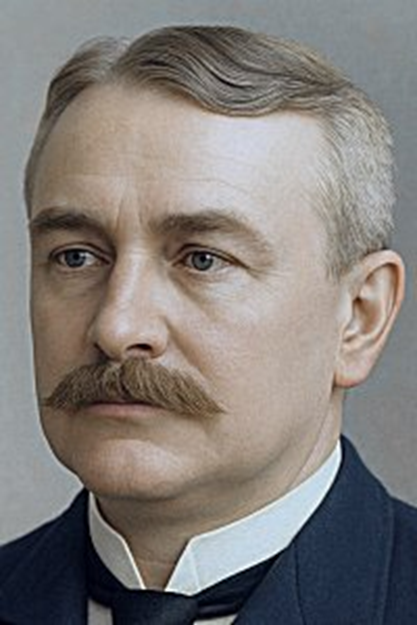
How do we fare today when it comes to our hymnody? Are we dominated by “happy” songs and Psalms, or is our singing balanced with songs about repentance and lament and the struggle with sin for personal holiness? Many of the inspired Psalms deal with these matters. There are certainly ample resources available to us in our hymnals, if we will use them. One example is the 1868 hymn from Horatio Richmond Palmer (1834-1907), “Yield Not to Temptation.” In the Lord’s Prayer, Jesus taught us to pray that God would not lead us into temptation, but would deliver us from evil (or the evil one). We need to pray that with greater earnestness, not only because of the temptations that are constantly bombarding us from the world around us, but especially from the temptations that arise within our own hearts. Palmer wrote this about how he came to write this hymn. “This song is an inspiration. I was at work on the dry subject of ‘Theory’ when the complete idea flashed upon me, and I laid aside the theoretical work and hurriedly penned both words and music as fast as I could write them. . . . I am reverently thankful that it [the hymn] has been a power for good. “
A composer and author, Palmer was born at Sherburne, New York, the son of Anson B. and Abby Maria (Knapp) Palmer, who were both prominent in musical circles. His mother died when he was only three years old. He gained his early musical education through his own efforts, and by such aid as he could obtain through private instruction. His sister taught him to read music when he was six years old, and at the age of nine he sang in his father’s church choir. Subsequently he pursued studies in music, metaphysics, and the languages under various teachers in New York, Berlin, Germany, and Florence, Italy, and commenced professional work as chorus-master at the early age of twenty. Mr. I.B. Woodbury, who had been engaged to conduct the summer festival of the Allegany County Association, at Rushford, N.Y., then young Palmer’s home, at the last moment had failed to appear on account of illness. The chorus and audience were assembled, and it was necessary that a leader should be obtained. Palmer, although the youngest leader present, was selected conductor, and performed the duties in a manner most satisfactory to all.
Three years later he entered the Rushford Academy as principal of the music department, and while there met and married a student, Lucia, daughter of Rockwell and Susan Chapman of Belfast, N.Y. Mrs. Palmer was a lady of large artistic and literary ability. It was said that she handled a pencil or brush exquisitely, and a pen entertainingly. Her “Night Scene on the Mississippi” is a painting worthy to hang with the best pictures in any gallery, while her “Grecian Days” is one of the most artistic and entertaining books written on the classic land. She also had great love and practical knowledge of art in architecture. The plans for their beautiful residence on the Hudson were drawn entirely from her dictation.
For the purpose of enlarging his field of labor, Dr. Palmer went west after the Civil War, and settled in Chicago, where he edited a musical monthly called “The Concordia,” wrote books, and made engagements to conduct associations. This work extended over all the northern states and some of the provinces of Canada. The most popular of his class books were “The Song Queen,” “The Song King,” and The Song Herald,” the combined sales of which reached far beyond the million mark. Then followed a long list of class and chorus books, among them, “Concert Choruses,” probably the finest compilation of high-grade music for conventions and choirs at that point in time. Among his theoretical works are his “Theory of Music; Class Method” of teaching the rudiments; “Manual for Teachers” in public schools; “Brief Statements;” “Musical Catechism;” “Dictionary of Musical Terms;” and “Piano Primer,” all of which were recognized standards during his lifetime. His writing was characterized by clearness, accuracy, and beauty, and his music was distinguished for grace, purity and melodiousness.
In 1875, he returned to New York City, where he set up the Church Choral Union in 1881, which eventually grew to 20,000 singers. After that time accompanied by his wife, he visited Europe three times, once having extended his travels into the Orient. In all, he spent nearly three years in the different capitals and musical centers of Europe, investigating the best methods of teaching, and studying the style and rendition of the most famous artists. During the period in which he had charge of the Church Choral Union in New York City, there were represented more than 200 churches, and at one of his mammoth concerts in Madison Square Garden he had nearly 4,000 singers, while the audience, consisting mostly of church people, filled the remaining portion of that vast auditorium. Palmer went on to organize similar groups in New York state, Pennsylvania, and Washington, DC. In 1877, the Summer School of Music at Chautauqua, New York, was established, and Palmer led it for 14 years. He also conducted annual music festivals in Cortland, New York, and directed the choir at the Broome Street Tabernacle in New York City for 11 years.
In 1886, Dr. Palmer became dean of the Summer School of Music at Chautauqua, N.Y., and conducted two to four concerts in a week in the presence of from eight to ten thousand people. It has been estimated that at least 75,000 persons, representing every section of the United States, came under his personal instruction. Palmer began composing at the age of eighteen, and was the author of a number of hymns that have become very popular throughout the Christian world. In many instances he has written the words as well as the music, and some of them have been translated into several languages. Among his widely known hymns are “Yield Not to Temptation,” “Shall I Let Him In,” “Beautiful Home,” “ The Rose of Sharon,” “Step by Step,” “Jesus Loves Little Children,” “Galilee, Blue Galilee,” “Peace, Be Still,” and “Come, Sinner, Come,” all of which he set to appropriate music. He has issued much sheet music of anthems and chorus books which had wide circulation. He has written under the noms de plume of Florence Le Claire, Frank Forest, Oraz, and P. Rankin Hollingsworth, and in all issued over forty volumes of music and musical subjects. He was regarded as having contagious energy and enthusiasm. The honorary degree of Mus. Doc. was conferred on him by Chicago University in 1879, and by Alfred University in 1880.
His hymn, Yield Not to Temptation,” makes it sound simple … just don’t do it. But anyone who has taken seriously what the Bible and their conscience tell them about the sin in their own heart knows that that is not easy at all. In fact, it will be a life-long battle, which is why Paul wrote about our spiritual armor in Ephesians 6. It would be nice if we could deal with temptation with a one-time decision, but that is not at all the case. The biblical call is clear: it is that we must put sin to death. Among the many verses addressing this is Colossians 3:5-6. “Put to death therefore what is earthly in you: sexual immorality, impurity, passion, evil desire, and covetousness, which is idolatry. On account of these the wrath of God is coming.”
One of the most famous quotes about this matter, apart from the Bible, is John Owen’s succinct counsel, “Be killing sin or it will be killing you.” In a 2022 on-line post from The Gospel Coalition, Grant Gaines has summarized John Owen’s “Nine Instructions for Killing Sin.” He began his article by saying that “too many people play with sin instead of putting it to death.” Here is Gaines’ list.
- Diagnose sin’s severity
- Grasp sin’s serious consequences
- Be convicted of your guilt
- Earnestly desire deliverance
- Consider the relationship between your sins and your natural temperament
- Avoid occasions that incite sin
- Address sin’s first signs
- Meditate on God’s glory
- Don’t rush to comfort yourself
For those who know their Bibles well, each of these topic titles will quickly bring to mind numerous scripture verses that support this pattern of counsel.
What are the temptations that we need to resist, before which we should not yield? The list is virtually unending. Sin and Satan are clever enough to customize the temptations that will be uniquely appealing to each individual. Prayer and closeness to the Lord will enable us to identify our own Achilles’ heel, where we are vulnerable to falling time after time. In his little 2025 book from Moody Publishers, “Killing Sin,” Karl Clauson suggests these areas where believers will find temptation hiding in the shadows of their hearts. He compiled this list from a questionnaire that asked people to identify the “one thing” that needed to change in their lives, the one thing where temptation is especially demanding and enticing. Here is the list. “Poor time management, gluttony, destructive thoughts, rebellion, pride, porn, finances anxiety, fear, gossip, disorganization, addiction, bad habits, bitterness, apathy, social media, and self.” It reminds one of the issues dealt with so well in Jerry Bridges’ 2007 book, “Respectable Sins; Confronting the Sins We Tolerate.” Such a list is helpful for us today to identify the ways in which we face temptation, and can be a helpful “addition” to the language of Palmer’s hymn, which tends to be somewhat vague, coming from the more “polite” style of communication typical of the late nineteenth century.
Singing Palmer’s hymn can be a valuable reminder to ourselves that we must devote ourselves to this battle every day. Most importantly, it’s a reminder that we cannot do this in our own strength. It’s spiritual warfare, and so we cannot hope to find victory over temptation apart from the power of the Holy Spirit. As we struggle with temptation and fail, we need the Bible’s encouragement that nothing can separate us from the Father’s love which continues even when He is disciplining us toward holiness (John 10:28-30), that nothing in creation (or in our own record of failures) can separate us from the love of Christ (Romans 8:31-39), and that we are promised the certainty that the Lord will bring to completion the work that He has begun in us (Philippians 1:6). In fact, our sense of guilt when we succumb to temptation is one of the evidences that we are indeed the Lord’s. Apart from that, our sin would not bother us.
And so we sing Palmer’s hymn to speak to our own soul, and also to remind others of the need to fully engage in this spiritual warfare, not just for the many benefits that we will receive as we do, but most of all for the pleasure and glory of the God who calls us to discipline ourselves for the purpose of godliness (1 Timothy 4:7-8).
Stanza 1 immediately sets the theme of temptation before us. Palmer makes an important distinction: it is not a sin to be tempted (it will happen to us every day), but it is yielding to that temptation which is sin, and that’s what the hymn tells us we must not do. And then he points to a wonderfully encouraging dynamic, that “each vict’ry will help you some other to win.” We experience that in many disciplines of life, whether vocational or musical or athletic. Even when we have fallen short of our goal, that experience can prove to be beneficial if it leads to the strengthening of the physical and mental muscles needed to do better next time. And each of those next times will be a struggle because of the weakness of the sin nature that remains within us. Therefore we must “fight manfully onward, dark passions” to subdue. The final phrase in every stanza is an absolutely essential principle. We can only resist these temptations if we are looking to Jesus, depending on His strength, and being motivated by His sacrificial love for us at the cross.
Yield not to temptation, for yielding is sin;
Each vict’ry will help you some other to win;
Fight manfully onward; dark passions subdue;
Look ever to Jesus, He will carry you through. (refrain)
The Refrain repeats this assurance at the end of each stanza: that we have a Savior who is willing and able to help, comfort, strengthen, keep, aid, and carry us through. What a powerful series of verbs!
Ask the Savior to help you, comfort, strengthen, and keep you;
He is willing to aid you, He will carry you through.
Stanza 2 gives directions more specific, with several examples of the temptations which attempt to seduce us into actions and attitudes that dishonor and grieve the Spirit who calls us to holiness. In 1 Corinthians 15:33, Paul warns us about “evil companions” and Colossians 3:8 cautions about “bad language.” The reverence due to God’s name is obviously a reference to the third commandment. And the next phrase about being “kindhearted and true” reminds us of Ephesians 4:29, where Paul wrote, “Let no corrupting talk come out of your mouths, but only such as is good for building up, as fits the occasion, that it may give grace to those who hear. And do not grieve the Holy Spirit of God, by whom you were sealed for the day of redemption. Let all bitterness and wrath and anger and clamor and slander be put away from you, along with all malice. Be kind to one another, tenderhearted, forgiving one another, as God in Christ forgave you.”
Shun evil companions; bad language disdain;
God’s name hold in rev’rence, nor take it in vain;
Be thoughtful and earnest, kindhearted and true;
Look ever to Jesus, He will carry you through. (refrain)
Stanza 3 speaks of what should motivate that diligent pursuit of holiness by resisting temptation, and it is the crown of righteousness that Paul expected to receive, as he wrote from death row in 1 Timothy 4:7-8. “I have fought the good fight, I have finished the race, I have kept the faith. Henceforth there is laid up for me the crown of righteousness, which the Lord, the righteous judge, will award to me on that day, and not only to me but also to all who have loved his appearing.”
To him that o’ercometh God giveth a crown;
Through faith we shall conquer, though often cast down;
He who is the Savior our strength will renew;
Look ever to Jesus, He will carry you through. (refrain)
The tune was composed by Palmer himself at the same time he wrote the lyrics.
Here is a link to hear the hymn.