
Easter Sunrise services are probably found in every community in America, perhaps in multiple churches as well as in joint community gatherings. What a wonderful way to make an emotional as well as a devotional connection to that first Easter morning. Many of us have happy memories of such services from our childhood, especially if we lived far enough south so that Easter morning would not be a final day of winter’s snow, or if the weather was conducive and we didn’t have to come with umbrellas to avoid being drenched in spring rains.
On Florida’s east coast, it’s quite common to find such services being conducted on the beach so that there can be an unobstructed view of the sun rising above the horizon, glistening on the waters like sparkling diamonds blinking on the waves. One of those kinds of memories for this writer is the Miami area Easter Sunrise Service conducted on the floating stage of the Miami Marine Stadium, which could seat several thousand, with an area on the water between the stands and the stage for people to engage in the service from their boats. Sponsored by Key Biscayne Presbyterian Church, local pastors and musicians were part of the service, which usually included a special guest. One year that was Joni Eareckson Tada.
But the great reality should not be memories of our sunrise services, but of that first “Son-Rise” when the Son of God rose from the dead, as He had promised to do. That monumental event marked the death of death (as John Own famously described it) and the ratification of the Father’s acceptance of Jesus’ atoning sacrifice on our behalf (as Paul described int in Romans 1). Paul also rightly describes the resurrection as one of those things of first importance in 1 Corinthians 15, the passage from which countless Easter sermons are preached each year.
When we examine the table of contents in hymnals, however they are structured, what stands out is that the largest sections are the hymns related to the person and work of Christ, especially those hymns associated with Advent/Christmas and Passion Week/Easter. How fitting that our greatest repertoire for congregational singing should focus on Jesus coming into the world and of Jesus’ bringing salvation to the world. And because these are so central to our faith, how wonderful that we not only have classic hymnody of previous ages, but also newer compositions by contemporary writers.
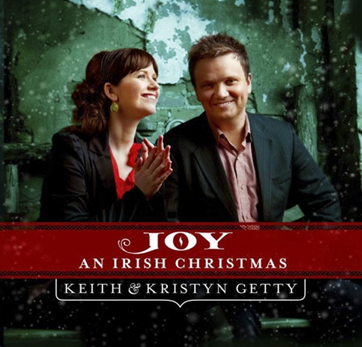
Most would agree that the greatest among the contemporary hymn writers are Keith and Kristyn Getty and the team of skilled writers and performers that have joined them as part of Getty Music. As I write this, they are celebrating the 25th anniversary of their most famous song, “In Chri st Alone.” They have gone on to write and record dozens of now well-known songs. This Irish couple combines solid theology with devotional intensity along with music that often has a pronounced Irish “flair!” Their music continues to grow in popularity through their concert tours (including an annual “Irish Christmas” in New York’s Carnegie Hall), their annual SING! conference in Nashville (attended by thousands in person and thousands more remotely), and the many CDs and published volumes of printed music. Now their music is spreading even more widely with the 2025 release of their SING! Hymnal.
They have written a marvelous song for Easter worship, one that is especially fitting for Easter Sunrise Services. It is “See What a Morning.” It was written in 2003 in collaboration with Stuart Townend, another Irish musician who has occasionally added his talent to the Getty’s work, including on “In Christ Alone,” with words from Stuart and music from Keith. They have given to this Easter song the title “Resurrection Hymn.”
In the SING! Hymnal, we find this statement about the “Resurrection Hymn” among the “Hymn Stories” at the end of the hymnal.
Creating a sense of drama is often a huge part of creating a song. In this song Stuart seeks to create a moment akin to the moment when people first discovered that Christ had risen from the dead. This hymn begins with the sense of Easter morning, then narrows in on the turnaround with Mary before creating a Trinitarian celebration in the final verse. I love singing this song at early morning Easter celebrations.
We know the story so well, it’s hard for us to appreciate the depth of confusion and despair into which Jesus’ disciples had sunk that weekend. Even though Jesus had repeatedly told them that it was necessary for Him to die and to be raised on the third day, it’s as if they had not heard a single word He had said to them. To them, Saturday must have been the worst day of their lives. Little did they know that the very next day would be the best day of their lives!
Stanza 1 invites people to come, in their biblically informed imagination, to that tomb in Jerusalem that first Easter morning. Had they come, they would have looked into an empty tomb. In the Gospel of John, we read that part of the grave clothes were folded (!). While this was a cave without a window, this morning they found it filled with light from supernatural angelic presence. What amazing words greeted their ears, the words repeated around the world in Easter liturgies of every language, “Christ is risen.” In those liturgies, when those words are spoken, the congregation repeats in a three-fold refrain, each time more enthusiastically, “His risen indeed!” Townend packs enormously important truths about God’s salvation plan in four phrases: “wrought in love, borne in pain, paid in sacrifice, fulfilled in Christ, the Man.”
See, what a morning, gloriously bright
With the dawning of hope in Jerusalem
Folded the grave clothes, tomb filled with light
As the Angels announce, “Christ is risen”
See God’s salvation plan
Wrought in love, borne in pain, paid in sacrifice
Fulfilled in Christ, the Man
For He lives, Christ is risen from the dead.
Stanza 2 invites people to look, again in their biblically informed imagination, at Mary Magdalene as she arrived at the tomb, “weeping, ‘Where is He laid?’” Her emotions must have been a combination of surprise and sorrow. Townend describes her turning away, and hearing the voice of Jesus “calling her name.” In the hymn lyrics, Townend suggests that we listen for Mary speaking in joyful amazement, “It’s the Master, the Lord, raised to life again.” Once again, Townend packs great truths into short phrases: “speaking life, stirring hope, bringing peace.” The stanza concludes by looking ahead to the day when we ourselves will hear the sound of His voice when He appears to call us home.
See Mary weeping, “Where is He laid?”
As in sorrow she turns from the empty tomb
Hears a voice speaking, calling her name
“It’s the Master, the Lord, raised to life again”
The voice that spans the years
Speaking life, stirring hope, bringing peace to us
Will sound ‘til He appears
For He lives, Christ is risen from the dead.
Stanza 3 invites people to join in a Trinitarian doxology, typical especially of British hymnody. Jesus’ resurrection exalts the Father, “the Ancient of Days,” the Spirit “who clothes faith with certainty,” and Himself as “the King crowned with power and authority.” And like a good sermon, it then leads us to consider the “so what” of the resurrection. Because of all this, “we are raised with Him” now to new life, and “we shall reign with Him” when He comes in glory.
One with the Father, Ancient of Days
Through the Spirit who clothes faith with certainty
Honor and blessing, glory and praise
To the King crowned with power and authority
And we are raised with Him
Death is dead, love has won, Christ has conquered
And we shall reign with Him
For He lives, Christ is risen from the dead.
Words and Music, Keith Getty, Stuart Townend. ©2003, Thankyou Music, Ltd.
Here is a link to Kristyn Getty singing this in one of their concerts.