
His wife’s dementia was making itself more evident, leading to his settling her out of their apartment and into the memory nursing care unit where she could have the skilled care she needed but where he could still visit with her every day, even taking her in her wheelchair for walks about the campus lake. But it was soon thereafter that he was diagnosed with terminal liver cancer, almost certainly from his Agent Orange exposure, something that tragically occurred in many fellow veterans about that time in their lives.
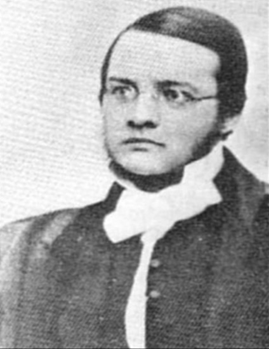
The hymn had been written in 1860 by William Whiting (1825-1878), while teaching at Winchester College in England. As a young man he had nearly drowned during a violent storm at sea, an experience that left a lasting impression on his spiritual imagination. This memory shaped his desire to compose a hymn that would express prayerful dependence on God for those facing the dangers of maritime travel. Whiting revised the text for publication in the 1861 edition of “Hymns Ancient and Modern.” The hymn gained immediate recognition because of its vivid biblical imagery and its pastoral sensitivity to the dangers faced by sailors.
It is often called “The Hymn for her Majesty’s Royal Navy” in the United Kingdom, but the “The Navy Hymn” here in American. This hymn was one of President Franklin Roosevelt’s favorites, and thus it was played at his funeral in 1945, and because he had served as Secretary of the Navy. Another famous performance was when the Navy Band played the hymn while the body of President John F. Kennedy was being carried up the steps of Capitol Hill where he would “lie in state.” Before he became president, J. F. K. was a member of the Navy, serving famously as a PT boat commander in World War II.
Whiting was born in Kensington, and was educated at Clapham and Winchester Colleges. He was later master of Winchester College Choristers’ School, where he wrote “Rural Thoughts and Other Poems,” 1851. That volume contained no hymns. Though he wrote other hymns, his reputation as a hymnwriter is almost exclusively confined to his “Eternal Father, Strong to Save.” The lyrics are a translation from a Latin “triune litany,” the first three stanzas addressing, in turn, the Father, Son and the Holy Ghost, and the last one calling upon the Trinity. The story goes that it was written for a pupil at Winchester who was worried about his forthcoming ocean voyage to America, but it may simply have been inspired by his own holiday experiences and perhaps especially by the bad storms of the previous year. Psalm 107 is also commonly cited as a source, especially the lines, “He maketh the storm a calm, so that the waves thereof are still” (v. 29). Whiting was fond of using imagery about the sea.
Eternal Father Strong to Save is one of the most widely recognized hymns invoking God’s protection over those who travel upon the sea. The text offers a prayerful appeal to the sovereign God who commands the forces of nature and preserves human life amid danger. Its imagery draws deeply from biblical narratives in which God demonstrates authority over the waters. The hymn’s enduring spiritual significance lies in its powerful portrayal of divine providence. Human beings often face circumstances beyond their control and the hymn gives voice to the Christian instinct to entrust life and safety to the Lord who governs creation. It therefore functions both as intercession and as confession of faith. Pastorally the hymn speaks to communities shaped by risk and service especially those connected with maritime work and military life. Yet its message extends far beyond the sea. The hymn reminds all believers that God remains present amid the uncertainties of life and that the Creator who commands the waves also sustains his people.
The hymn is deeply rooted in biblical portrayals of God’s authority over the sea. Throughout Scripture the waters symbolize both the power and unpredictability of creation. Yet the biblical witness consistently affirms that the Lord reigns above the waves and commands the forces of nature. For a specific biblical connection for this hymn, our best choice would be Psalm 107, which recounts how sailors cry out to God during a storm and are delivered when he calms the sea. The Gospels echo this theme when Jesus rebukes the wind and waves demonstrating divine authority. These accounts form the theological background for the hymn appeal to God protection. The hymn also reflects the broader biblical vision of creation under divine rule. From the gathering of the waters in Genesis to the promise of a renewed creation in Revelation Scripture proclaims that the Creator governs every element of the cosmos.
Several prominent Christian doctrines find expression in Whiting’s hymn. The hymn expresses a robust theology of divine sovereignty. By addressing God as the one who sets the boundaries of the sea, the text affirms that the natural world operates under the authority of the Creator. A Trinitarian pattern also emerges across the stanzas of the hymn. Later versions explicitly address the Father who commands the sea the Son who calmed the storm and the Holy Spirit who moves upon the waters. This structure reflects classical Christian teaching about the unified work of the Trinity in creation and redemption. The hymn further underscores the doctrine of providence. It recognizes that human vulnerability does not negate God care but rather invites believers to trust in the sustaining presence of the Lord.
“Eternal Father Strong to Save” achieved widespread recognition through its adoption in naval worship services. Both the British Royal Navy and the United States Navy incorporated the hymn into official ceremonies (including Academy graduations) and memorial services. Through more than a century of use the hymn has become a powerful symbol of faith in times of danger and uncertainty. Its continued presence in worship demonstrates the enduring relevance of prayerful trust in the God who rules the seas. The hymn’s influence extends beyond military contexts. Churches across many denominations include it in hymnals as a prayer for divine protection and as an expression of trust in God sovereignty over creation.
The hymn is a prayer, addressed in the sequence of stanzas to each of the three persons of the Trinity, with specific requests of each. They find their coherence in coming from the soul of one who is troubled and needing assurance of divine protection. This Navy Hymn is equally suited not only to the sailor literally setting out to sea, but also to every believer facing daunting challenges from the hardships of life which rise up before us like a storm at sea. Those are perils common to all mankind.
The version found in our hymnals differs somewhat from the version sung by midshipmen and graduates of the academy as it has been transformed occasionally to include prayerful references to those in other branches of military service (as in the air and on the land) with the perils they may face.
Stanza 1 calls out to God the Father, the first person of the Holy Trinity. Here the anxious soul prays that He who is “strong to save” will extend His arm to calm the “restless wave” and the “mighty ocean deep” to keep their “appointed limits.” We have a God who is more than able to protect us in such circumstances.
Eternal Father, strong to save,
Whose arm does bind the restless wave,
Who bidd’st the mighty ocean deep
Its own appointed limits keep;
O hear us when we cry to Thee
For those in peril on the sea.
Stanza 2 calls out to God the Son, the second person of the Holy Trinity. Here the anxious soul prays that the Lord Jesus will do for us what He did for the disciples on the Sea of Galilee when with a word He caused the storm to cease. This is the same Savior who came walking on the water in the midst of the tempest and lifted Peter to safety when his faith failed.
O Savior, whose almighty word
The winds and waves submissive heard,
Who walkedst on the foaming deep,
And calm amid the rage did sleep;
O hear us when we cry to Thee
For those in peril on the sea.
Stanza 3 calls out to God the Holy Spirit, the third person of the Holy Trinity. Here the anxious soul prays that the Holy Spirit would do for us what we sometimes forget that He had done in the early moments of creation, brooding over the face of the deep to bring “light and life and peace” in place of the “chaos dark and rude.”
O sacred Spirit, who didst brood
Upon the chaos dark and rude,
And badd’st its angry tumult cease,
And gavest light and life and peace;
O hear us when we cry to Thee
For those in peril on the sea.
Stanza 4 calls out to the Trinity in the union of the three in one. Here the anxious souls prays that our Triune God would shield us and those we love in danger’s hour, whatever that danger might be at any moment. And not only “from rock and tempest, fire, and foe,” but also from whatever health or relationship or unexpected threat might arise. We wany “glad hymns of praise” to arise from every place where God shows His mighty hand.
O Trinity of love and pow’r,
Our brethren shield in danger’s hour;
From rock and tempest, fire, and foe,
Protect them where-so-e’er they go;
And ever let there rise to Thee
Glad hymns of praise from land and sea.
The tune MELITA was composed specifically for this text by Anglican clergyman and musician John Bacchus Dykes (1823-1876). The tune name is thought to be related to the island of Malta, where the Apostle Paul was shipwrecked. As a child in Sussex, England, he began violin and piano lessons. At the age of ten he became the organist of St. John’s in Hull, where his grandfather was vicar. After receiving a classics degree from St. Catherine College, Cambridge, England, he was ordained in the Church of England in 1847. In 1849 he became the precentor and choir director at Durham Cathedral, where he introduced reforms in the choir by insisting on consistent attendance, increasing rehearsals, and initiating music festivals. He served the parish of St. Oswald in Durham from 1862 until the year of his death. To the chagrin of his bishop, Dykes favored the high church practices associated with the Oxford Movement (choir robes, incense, and the like). A number of his three hundred hymn tunes are still respected as durable examples of Victorian hymnody. Most of his tunes were first published in early editions of the famous British hymnal, “Hymns Ancient and Modern.”
He was born in Hull, England, the fifth child and third son of William Hey Dikes or Dykes, a ship builder, and Elizabeth, daughter of Bacchus Huntington, a surgeon of Sculcoates, Yorkshire, and granddaughter of the Rev. William Huntington, Vicar of Kirk Ella. His paternal grandparents were the Rev, Thomas Dykes of Hull, and Mary, daughter of William Hey. He was also a cousin of the Rev. George Huntingdon. Dykes was a younger brother of the poet and hymnwriter Eliza Alderson, and wrote tunes for at least four of her hymns. In 1812 his father entered a shipbuilding partnership with William Barnes of Hull, Barnes, Dikes & King. They launched the Ferraby at their yard at Wincolmlee on the River Hull in 1815. Dikes, King & Co. launched the Zoroaser at Hull in 1818.
John Bacchus Dykes’ father was manager of a branch of the Yorkshire Bank opened in Hull in 1834. He was later a banker in Wakefield, from November 1841 at the Wakefield and Barnsley Union Bank, 65 Westgate. The family moved there at the end of 1841; it was mentioned at the time that John was an organist at his grandfather’s church. John attended the West Riding Proprietary School in Wakefield, to 1843. By the age of 10, John Bacchus Dikes played the organ at St. John’s Church in Myton, Hull, where his paternal grandfather (who had built the church) was vicar and his uncle (also Thomas) was organist. He was taught by the Hull organist George Skelton. He also played the violin and the piano. He studied first at Kingston College, Hull.
Dykes matriculated in 1843 (with the surname Dikes) at Katharine Hall, Cambridge. There he was the second Dykes Scholar: the second beneficiary after his elder brother, Thomas, of an endowment established in 1840 in honor of his grandfather. As an extra-curricular subject, he studied music under Thomas Attwood Walmisley, whose madrigal society he joined. He also joined the Peterhouse Musical Society (later renamed the Cambridge University Musical Society), becoming its fourth President, immediately following his friend, William Thomson. He graduated B.A. in 1847 and M.A. in 1851.
Dykes was appointed to the curacy of Malton, North Yorkshire, in 1847. He was ordained deacon at York Minster in January 1848. He was awarded the Mus.Doc. degree by Cambridge in 1849. In 1849 Dykes was appointed a minor canon of Durham Cathedral (an appointment which he held until his death), and shortly thereafter to the office of precentor. Between 1850 and 1852 he lived at Hollingside House, later the official residence of the Vice Chancellor of the University of Durham. 1862 he relinquished the precentorship on his appointment to the living of St. Oswald’s, Durham, situated almost in the shadow of the cathedral, where he remained until his death in 1876.
Dykes was from an evangelical family background. He moved to an Anglo-Catholic position in the Church of England during his Cambridge years, and ultimately became a “ritualist,” in full sympathy with the Oxford Movement, and became a member of the Society of the Holy Cross. At this period, antagonism between the evangelical and Anglo-Catholic wings of the Church of England was sharp. A test case concerned the Brighton-based Rev. John Purchas (1823-1872) who, as a consequence of a Privy Council judgment which bore his name, was compelled to desist from such practices as facing east during the celebration of Holy Communion, using wafer bread, and wearing vestments other than cassock and surplice. He was pursued through the courts, until he resigned his living in 1882.
Dykes’s treatment at the hands of the evangelical party, which included Bishop Charles Baring, was largely played out locally. Archdeacon Edward Prest held strongly to anti-ritualist views. The situation in County Durham in 1851 was that Wesleyan Methodist congregations outnumbered the Anglicans. Something on which Baring and Dykes agreed was that the strength of nonconformity reflected on failures of the Church of England. The Dean of Durham from 1869, William Charles Lake, was on the other hand a High Churchman, and not an opponent of ritualism, who put his views on the issue on record in a letter to “the Times” in 1880. He took on Baring over restoration of the cathedral, and succeeded shortly after Dykes had died.
Dykes wish to recruit George Peake as a curate, for his expanding parish. Peake was an Oxford graduate, ordained priest in 1872, who had been a curate in Hull and then had moved to Houghton le Spring. Dykes had a positive recommendation for Peake from the Rev. Francis Richard Grey. Grey, Rector of Morpeth, Northumberland signed the 1873 “Declaration on Confession and Absolution.” put together by Edward Bouverie Pusey. Baring refused to license Peake. While St Oswald’s was a parish that required two curates, Baring asked for a pledge they would not use ritualist practices. Dykes then sought from the Court of Queen’s Bench a “writ of mandamus,” requiring the Bishop to do so.
Dykes’s failure to change Baring’s stance was followed by a gradual deterioration in his physical and mental health. It necessitated absence (which was to prove permanent) from St Oswald’s from March 1875. Rest and the bracing Swiss air proving unavailing, Dykes went to recover on the south coast of England. Dykes was admitted to a lunatic asylum, Ticehurst House in East Sussex, and died on 22 January 1876, aged 52. He was buried in the ‘overflow’ churchyard of St Oswald’s, a piece of land for whose acquisition and consecration he had been responsible a few years earlier. He shares a grave with his youngest daughter, Mabel, who died, aged 10, of scarlet fever in 1870. Dykes’s grave is now the only marked grave in what, in later years, was transformed into a children’s playground.
Dykes has been called “perhaps the most significant High Church composer in the Victorian Church of England.” This standing was despite his main efforts being as a parish priest in the Tractarian tradition, rather than as a musician. He is best known for the over 300 hymn tunes he composed. Of these, many were commissioned from him.
Tractarian leaders of the 1830s, influenced by the Roman Breviary and its medieval hymns in Latin, argued that hymns were just as characteristic of the Catholic tradition as of the evangelical. Up to the middle of the 19th century, words of hymns and the tunes to which they were sung were not necessarily closely identified. The words might be taken from one book, and the tune from another.
Here is a link to American composer Dan Forrest’s magnificent anthem based on the hymn, composed to celebrate the 75th anniversary of D-Day: