
At the center of the Christian faith is giving praise to God: Father, Son, and Holy Spirit. It is the ultimate purpose for which we were created (“to glorify God and to enjoy Him forever”), and should come naturally to us as beings hard-wired for this very purpose. As John Piper has so often said and written, it is both our duty and our delight. When we look at something that is inherently beautiful and awe-inspiring, it is our natural instinctive response to admire it, praise it, and to call those around us to join us in that celebration of its greatness. And what could be more beautiful, more awe-inspiring, more deeply enthralling than to gaze on the beauty of the Lord (Psalm 27:4)?
In fact, this is one of the most prominent themes given to us by God in the inspired hymn-book His Spirit has composed for us: the 150 Psalms. They are filled with both personal and corporate calls to praise Him, and give us God-breathed words to use in doing so. This is especially so in latter Psalms in Book Five of the Psalter.
- Psalm 95:1-3 – “Come, let us sing for joy to the LORD; let us shout aloud to the Rock of our salvation. Let us come before Him with thanksgiving and extol Him with music and song. For the LORD is the great God, the great King above all gods.”
- Psalm 100:1-4 – “Shout for joy to the LORD, all the earth. Serve the LORD with gladness; come before Him with joyful songs. Know that the LORD is God; it is He who made us, and we are His people; His name is the LORD.”
- Psalm 136:1-3 – “Give thanks to the LORD, for He is good. His love endures forever. Give thanks to the God of gods. His love endures forever. Give thanks to the Lord of lords: His love endures forever.”
- Psalm 138:1-3 – “I will praise You, Lord, with all my heart; before the gods I will sing Your praise. I will bow down toward Your holy temple and will praise Your name for Your unfailing love and Your faithfulness.”
- Psalm 150:1-6 – “Praise the LORD. Praise God in His sanctuary. Praise Him in His mighty heavens. Praise Him for His mighty acts. Praise Him with the sound of the trumpet. Praise Him with the lyre and harp. Praise Him with the timbrel and dance. Praise Him with stringed instruments and the flute. Let everything that has breath praise the LORD. Hallelujah!”
This dimension of the Christian life and heart is well-represented in our hymn repertoire. Some of these compositions are calls to others to join us in praising our God. Others are actually expressions of praise offered directly to Him. Whether it’s in private worship in our homes in the morning or corporate worship in the Lord’s house with our brothers and sisters on the Lord’s Day, the Scriptures make it abundantly clear that the Lord is present to receive our praise, and delights to have us “hymn” our tributes to His praise-worthiness. Indeed, according to the book of Revelation (especially chapters 4 and 5), this is what is happening right now (and will continue with us there into eternity), as saints and angels surround His throne, singing “Worthy is the Lamb who was slain to receive power and wealth and wisdom and might and honor and glory and blessing!”
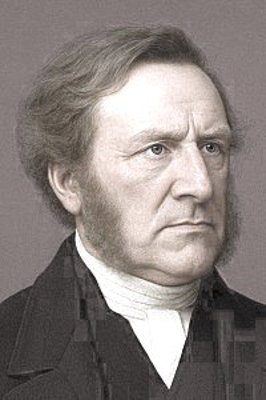
In this study, we look at one wonderful example of this call to praise in the hymn “Praise the Savior, Ye Who Know Him.” It was written in 1806 by Thomas Kelly (1769-1855), an Irish minister, poet, and gifted musician who authored nearly 800 hymns. These include “Look, Ye Saints the Sight Is Glorious,” “The Head That Once Was Crowned with Thorns,”
The son of Thomas Kelly, a Judge of the Irish Court of Common Pleas, Kelly was born in Dublin, County Queens, July 13, 1769, and educated at Trinity College, Dublin. There he was influenced by John Walker (1769-1833), also a Trinity College undergraduate. He had been impressed with the views of William Romaine (1714-1795) and the Hutchinsonians. He originally trained for a law career, and entered the Temple, London, with that intention. But having experienced a profound spiritual transformation, he accepted Holy Orders to be ordained as an Anglican priest in 1792. His earnest evangelical preaching in Dublin led Archbishop Fowler to inhibit him and his companion preacher, Rowland Hill, from preaching in the city. For some time he preached in two unconsecrated buildings in Dublin, Plunket Street, and the Bethesda, and then, having seceded from the Established Church, he erected places of worship at Athy, Portarlington, Wexford, etc, in which he conducted divine worship and preached.
With his allies, Kelly spread his evangelical views widely in Ireland. In 1802 he founded the religious sect that became known as the Kellyites, with half a dozen congregations, recruiting some ministers from Scotland, where the same year the seminary run by the Haldane brothers, Robert and James Alexander, moved from Glasgow to Edinburgh and expanded. In 1803 he broke with the Church of Ireland. The same year, Walker had gathered a group naming itself the Church of God, and he was expelled as a fellow of Trinity College, Dublin in 1804.
Kelly’s personal life reflects the themes of the hymn. At age 85, he suffered a stroke and, at his deathbed, was moved to respond to a quote of Psalm 23 with his own words: “The Lord is my everything.”This underscores the intimate, all-encompassing relationship he believed Christians should have with God. Miller, in his “Singers & Songs of the Church,” 1869, wrote:—
Mr. Kelly was a man of great and varied learning, skilled in the Oriental tongues, and an excellent Bible critic. He was possessed also of musical talent, and composed and published a work that was received with favor, consisting of music adapted to every form of meter in his hymn-book. Naturally of an amiable disposition and thorough in his Christian piety, Mr. Kelly became the friend of good men, and the advocate of every worthy, benevolent, and religious cause. He was admired alike for his zeal and his humility; and his liberality found ample scope in Ireland, especially during the year of famine.
Kelly’s hymn is filled with the joyful spirit of praise that should characterize the heart of every believer each day. It was true of Paul even in his imprisonment in Rome, as he wrote to the Philippian church, “Rejoice always, and again I say, rejoice!” History records countless instances of believers rejoicing, even as they were being led to martyrdom, counting it an honor to suffer for the sake of Christ. Surely our worship should be marked by such a spirit. This hymn gives us a great resource for doing so.
Stanza 1 points us to our indebtedness to the one who has given Himself for us, and to us. Truly, “Who can tell how much we owe Him?” But we render praise to Him, not to repay (which we could ever do!), but to express our deep gratitude. And the praise that He desires is that we give ourselves to Him, “All we are and have.”
Praise the Savior, ye who know Him!
Who can tell how much we owe Him?
Gladly let us render to Him
all we are and have.
Stanza 2 points us to the name that is above every name, that name that charms us in the sense that it thrills us. It is the name of the captain of our salvation who has given us the spiritual armor that we need for our conflict, and who stands with us so that we cannot be ultimately harmed, as long as we continue trusting in Him.
Jesus is the name that charms us;
He for conflict fits and arms us;
nothing moves and nothing harms us
while we trust in Him.
Stanza 3 points us to the trust we place in Him, trust not only to forgive our sins, but to teach and use and guide and protect us through all of life’s challenges. Faithfulness stands out among His glorious character qualities, because of the certainty of His fulfilling every promise He has made to us in His Word. As we read in Romans 8, nothing can separate us from His love.
Trust in Him, ye saints, forever;
He is faithful, changing never;
neither force nor guile can sever
those He loves from Him.
Stanza 4 points us to the security we have, not so much because of our cleaving to Him as to His enabling us to continue cleaving to Him. In doing so, we look ahead “to the hour of our receiving promised joys” with Him. What a day that will be, when we can see Him, no longer through a glass darkly, but then face to face!
Keep us, Lord, O keep us cleaving
to Thyself, and still believing,
till the hour of our receiving
promised joys with Thee.
Stanza 5 points us to that great heavenly reward, not just of the things we will receive, as we cast our crowns before His feet. No, we also long for the day when all traces of sin will be forever gone. Kelly’s phrases are extraordinarily eloquent.
Then we shall be where we would be,
then we shall be what we should be;
things that are not now, nor could be,
soon shall be our own.
The tune typically used for this text is ACCLAIM. Little information about its background is available, other than that it has been traditionally associated with a German melody. It has been used in various hymnals since the late 19th century.
Here is a link to sing along with the hymn.