
This wonderful prayer is part of the Anglican liturgy for a service of worship at the time of the death of one of God’s saints as earthly life comes to an end. From the Book of Common Prayer:
Man that is born of a woman hath but a short time to live, and is full of misery. He cometh up, and is cut down, like a flower; he fleeth as it were a shadow, and never continueth in one stay.
In the midst of life we are in death: of whom may we seek for succour, but of Thee, O Lord, who for our sins art justly displeased?
Yet, O Lord God most holy, O Lord most mighty, O holy and merciful Savior, deliver us not into the bitter pains of eternal death.
Thou knowest, Lord, the secrets of our hearts; shut not Thy merciful ears to our prayer; but spare us, Lord most holy, O God most mighty, O holy and merciful Savior, Thou most worthy judge eternal, suffer us not, at our last hour, for any pains of death, to fall from Thee. Amen
It has become common in the 21st century for a funeral or memorial service for believers (and even for unbelievers) to be called a “Celebration of Life.” There is certainly legitimacy for this, since such a service for one who has trusted in Christ for salvation could be viewed as a graduation celebration, as long as the focus is not on the person who has graduated into glory based on his or her accomplishments, as with an academic graduation ceremony. No, the graduation is realized only because of what Jesus has accomplished on behalf of a sinner who repented and believed the gospel.
Such “Celebrations of Life” uniformly become recitations of the happy memories and significant achievements of the individual, hopefully achievements that advanced the kingdom of God. While this is helpful and comforting for family and friends, it easily falls into the pattern of our secular culture which tries to ignore the reality, pain, and inevitability of death as the curse of sin. By keeping the music “happy,” filling the room with flowers, and introducing the service with a scrolling slide show of pictures of the life of the loved one, our culture makes great efforts to keep from viewing death for what it is, the horrible curse wrought by sin and the final enemy that can only be conquered by the resurrection of the one who put death to death, as the 17th century Puritan John Owen famously described it. Here is how Carl Trueman has addressed this in his newest book, “The Desecration of Man.”
This denial of the reality of death is also reflected in the creeping intrusion of “celebrations of life” into Christian churches as the default liturgy of death. The transformations of funerals into celebrations is an attempt to deny death its due. This is understandable. Funerals are not only moments where we have to face the aching loss of a loved one, but they are also reminders of our own mortality. They are grim rituals, and the desire to find some relief from their emotionally brutal ethos is quit reasonable. Nonetheless, celebrations of life are as futile as they are strange – for if you set out to underline the devastation wrought by a death, you could hardly do better than to recollect the joy and laughter the deceased brought to the lives of others. Bankruptcy is not made more bearable by memories of all the money once enjoyed and now lost.
If we want to bring the real joy into such an occasion because of the gospel, wouldn’t it be more appropriate to call such gatherings a “Celebration of Eternal Life,” drawing attention not to the commendable things of the deceased, but rather to the glorious gift from the God of grace? As we gather in this service, remind us all of what Jesus has done to take away the sting of death (1 Corinthians 15:54-57). Make it a celebration of the eternal life that has been given freely to all who believe. Make it an opportunity for those who attend, many of whom may not yet be believers, to hear how to make sure that death will not claim them for eternity, but that they may awaken in the presence of a loving Savior who will say, “Welcome home; well done, good and faithful servant. Enter into the joy of your Lord.”
There are countless things that come to us in this life by the good providence of God. In our private meditations as well as our corporate worship we ought often to meditate on them. Many of the Psalms describe the wonders of creation that surround us with their awesome beauty. We surely must remember the many times the Lord has wonderfully answered our prayers, the many happy experiences in this life, from satisfaction in work and rest in vacations, and the great joys afforded us with family and friends. In a funeral or memorial service, there is certainly a place for these cherished memories to be shared. But Psalm 103 directs us to do so especially in regard to His goodness to us in spiritual things, as we read there,
Bless the LORD, O my soul, and all that is within me, bless His holy name. Bless the LORD, O my soul, and forget not all His benefits, who forgives all your iniquity, who heals all your diseases, who crowns you with steadfast love and mercy, who satisfies you with good so that your youth is renewed like the eagle’s.
So not just when this earthly life comes to a close, but day by day in the hardships that life in this fallen world inevitably brings, we need a secure faith God’s promises that will sustain us and shape our attitude in responding to these difficult challenges. Such has been the case for me as I write this hymn study. Within the last two weeks, I have been diagnosed with pancreatic cancer. Those are not words that anyone wants or expects to hear. Not too many years ago, that would have been a death sentence. But today medical advances have brought new hope for management and treatment for this previously fatal form of cancer. Mine has been found at an early stage. Though my pancreas shows cancer throughout its length, PET scan shows no indication of spread anywhere else. More tests and procedures are in the process of being scheduled for me, including chemotherapy and possibly major surgery. But there are many today who have traveled this road and are living now years later without a pancreas.
So how does a Christian respond to such news in a way that is consistent with the theology we embrace and honoring to the Savior we trust? We respond by casting all our cares on the one who cares for us (1 Peter 5:7). We respond by grasping the comforting promises of Scripture, especially in the Psalms. We respond by praying that the Lord will enable us to bear a God-glorifying testimony, as John Piper wrote in “Don’t Waste Your Cancer.” We respond by thinking about heaven more than w are accustomed to doing, and bringing to mind what awaits us in glory when we will see Jesus, no longer through a glass darkly, but then face to face (1 Corinthians 13:12). And we respond by singing the hymns that call us to rejoice even in adversity, knowing that the God who loves us and has ordained all our days, before one of them came to be (Psalm 139:16) is a God who is able to do exceeding, abundantly above all that we ask or think (Ephesians 3:20).
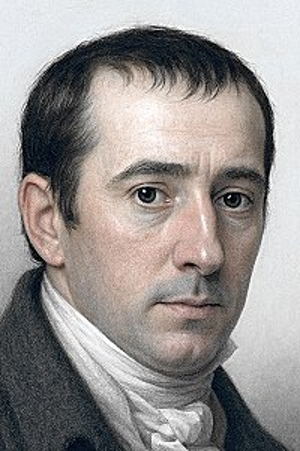
And obviously we should sing hymns that will reinforce these truths and strengthen our confidence in our Lord. Such a hymn is “Call Jehovah Thy Salvation,” a paraphrase of Psalm 91 first published in 1822 by Scottish-born Moravian hymn writer, poet, and editor James Montgomery (1771-1854). He was born in Irvine, Ayrshire, Scotland to Moravian missionary parents who died in the West Indies while he was still a child, leaving him in the care of Moravian settlements in Ireland and England. He began writing poetry and hymns at a young age, inspired by the Moravian Hymn-Book and biblical texts, producing his first hymn, a paraphrase of Psalm 113, while still a teenager.
Montgomery moved to Sheffield in 1792, where he became assistant and later editor of the “Sheffield Iris” newspaper. His editorial work was marked by advocacy for social justice, including opposition to slavery, lotteries, and the exploitation of child chimney sweeps. At the Moravian school at Fulneck, secular studies were banned, but James still found means of borrowing and reading a good deal of poetry and made ambitious plans to write epics of his own. On failing to complete his schooling, Montgomery was apprenticed to a baker in Mirfield, then to a store-keeper at Wath-upon-Dearne. After further efforts, including an unsuccessful attempt at a literary career in London, he moved north again to Sheffield in 1792 as an assistant to Joseph Gales, auctioneer, bookseller and printer of the “Sheffield Register,” who introduced him into the local Lodge of Oddfellows, to which he later addressed a song. In 1794, Gales left England to avoid political prosecution and Montgomery took the paper in hand, changing its name to the “Sheffield Iris.”
These were times of political repression. Montgomery was twice imprisoned on charges of sedition, first in 1795 for printing a poem to celebrate the fall of the Bastille in revolutionary France, and secondly in 1796 for criticizing a magistrate for forcibly dispersing a political protest in Sheffield. Turning his jail experiences to some profit, he then published a pamphlet of poems written during his captivity: “Prison Amusements” (1797). His later prose account of the period appeared in 1840. For some time the “Iris” was the only newspaper in Sheffield, but beyond an ability to produce fairly creditable articles from week to week, Montgomery lacked the journalistic skills to take full advantage of his position. Other newspapers arose to fill the place which his might have held and in 1825 he sold out to a local bookseller, John Blackwell.
Despite his radical political stances, he maintained a deep religious devotion, which informed his hymn writing. He collaborated with Reverend James Cotterill to revise and expand Cotterill’s “Selection of Psalms and Hymns,” leading to the 1820 edition that included many of Montgomery’s own compositions Over his lifetime, he wrote more than 400 hymns, with over 100 still commonly sung today His hymns are celebrated for their scriptural depth, poetic beauty, and devotional sincerity, often combining theological insight with accessible language.
Some of Montgomery’s most enduring hymns include:
- “Angels from the Realms of Glory” – a Christmas carol first published in 1816
- “Hail to the Lord’s Anointed” – a metrical version of Psalm 72
- “Prayer is the Soul’s Sincere Desire” – a hymn exploring the nature of prayer
- “Go to Dark Gethsemane” – a Passion hymn widely used during Holy Week
- “The Lord Is My Shepherd” – based on Psalm 23
- “Stand Up and Bless the Lord” – a hymn of praise and worship
Montgomery’s hymns often celebrate the incarnation of Christ, the mission of the church, and the hope of redemption, reflecting both his Moravian upbringing and his lifelong commitment to Christian service.
Montgomery’s influence endures in hymnals across denominations worldwide. He was honored with a public funeral in Sheffield, a royal pension, and memorials including a statue and stained glass window His hymns are considered on par with those of Isaac Watts and Charles Wesley, and his work continues to inspire worshippers with its combination of poetic excellence and spiritual depth. James Montgomery’s life exemplifies the fusion of literary talent, religious devotion, and social conscience, ensuring that his hymns remain a vital part of Christian worship centuries after their composition.
From 1835 until his death, Montgomery lived at The Mount in Glossop Road, Sheffield. He was well regarded in the city and played an active part in its philanthropy and religious life. He died on April 30, 1854, was honored by a public funeral, and buried in Sheffield General Cemetery. He had remained unmarried. In 1861, a monument designed by John Bell (1811–1895) was erected over his grave in the Sheffield cemetery at a cost of £1000, raised by public subscription on the initiative of the Sheffield Sunday School Union, of which he was among the founding members. On its granite pedestal is inscribed: “Here lies interred, beloved by all who knew him, the Christian poet, patriot, and philanthropist. Wherever poetry is read, or Christian hymns sung, in the English language, ‘he being dead, yet speaketh’ by the genius, piety and taste embodied in his writings.” There are also extracts from his poems “Prayer” and “The Grave.” After the statue fell into disrepair it was moved in 1971 to the precincts of Sheffield Cathedral, where there is also a memorial window to him.
Elsewhere in Sheffield there are various streets named after Montgomery, as is a Grade II-listed drinking fountain on Broad Lane. The Surrey Street meeting hall of the Sunday Schools Union (now known as The Montgomery) was named in his honor in 1886. It houses a 420-seat theatre, which also bears his name. Elsewhere, Wath-upon-Dearne, flattered by being called “the queen of villages” in his work, has repaid the compliment by naming after him a community hall, a street and a square. His birthplace in Irvine was renamed Montgomery House after he had paid the town a return visit in 1841, but it has since been demolished.
As I proceed today with my journey through further testing and treatment following my recent pancreatic cancer diagnosis, I will be scouring the Psalms for solid nourishment for my soul, cherishing the many assurances of God’s kindness and compassion and wisdom and love and power, and meditating on such self-descriptions He has given of Himself in these terms, terms that become even more precious when I see how they are all portraits of Jesus, who calls me His own.
- God’s Anointed – 2:2
- My Confidence – 71:5
- My Counselor-16:7
- My Cup – 16:5
- The Defense of my life – 27:1
- My Deliverer – 18:2, 70:5, 144:2
- My Exceeding Joy – 43:4
- My Fortress – 18:2, 31:3, 71:3, 91:2, 144:2
- My Glory – 3:3
- God of Jacob – 81:1, 84:8
- My Help – 22:19, 30:10, 34:20, 46:2, 54:4, 70:5, 115:9
- God’s Holy One – 16:10, (of Israel) 71:22, 78:41
- My Hope – 71:5
- Horn of my salvation – 18:3
- Judge – 75:7, 94:2
- Your Keeper – 121:5
- My King – 5:2, 10:16, 44:4, 74:12
- Lifter of my head – 3:3
- My Light – 27:1
- My Lovingkindness – 144:2
- Mighty One 45:3, 50:1, 132:2
- Most High – 9:2, 18:13, 21:7, 46:4, 50:14, 77:10, 78:17
- Most High Lord 7:17, 47:2
- My Mountain – 30:7
- My Portion – 142:5, (of my inheritance) 16:5
- Priest – 110:4
- My Redeemer – 19:14
- My Refuge – 11:1, 14:6, 46:1, 59:16, 61:3,62:8, 70:7, 91:2, 94:22, 142:5
- God of my righteousness – 4:1
- My Rock – 18:2, 19:14, 28:1, 31:3, 42:9, 62:2,6, 62:7, 71:3, 89:26, 95:1
- My Salvation – 27:1, 38:22, 62:2,6, (God of my) 25:5
- Savior – 17:7
- Your Shade – 121:5
- My Shepherd 23:1, (of Israel) 80:1
- My Shield – 18:3, 28:7, 34:20, 59:11,16, 84:11, 115:10, 144:2
- My Song – 118:14
- God’s Son – 2:7, 12
- My Strength – 18:1, 28:7, 31:4, 46:1, 59:17, 74:26, 118:14
- My Stronghold – 9:9, 18:3, 59:9,17, 62:2,6, 94:22, 144:1
- Sun – 84:11
- Sustainer of my soul – 54:4
- Tower of strength – 61:3
It was Psalm 91 that gave my wife and me such much-needed support during the Gulf War. It was the guide for our daily prayers for our son as he was driving an Abrams tank in the biggest tank battle in history. As God brought him through that safely, we now trust Him to bring us through this cancer battle of ours securely.
Stanza 1 calls for rest under God’s shade, promising no alarms, hidden snare, or harm. What assurance that nothing can touch us apart from His sovereign design!
Call Jehovah thy salvation, rest beneath th’Almighty’s shade;
In His secret habitation dwell and never be dismayed;
There no tumult shall alarm thee, thou shalt dread no hidden snare;
Guile nor violence can harm thee, in eternal safeguard there.
Stanza 2 affirms God’s protection from sword, pestilence, and sudden death, guarding us by His angel legions.
From the sword at noon-day wasting, from the noisome pestilence,
In the depth of midnight blasting, God shall be thy sure defense;
He shall charge His angel legions watch and war o’er thee to keep;
Though thou walk through lonesome regions, though in desert wilds thou sleep.
Stanza 3 encourages steadfast love for God, promising salvation in trouble and eternal life beyond the grave.
Since with pure and firm affection, thou on God hast set thy love,
With the wings of His protection He will shield thee from above;
Thou shalt call on Him in trouble, He will harken, He will save;
Here for grief reward thee double, crown with life beyond the grave.
Often sung to the tune HYFRYDOL (as with “Jesus, What a Friend for Sinners”) there is a newer tune found in some hymnals, including the “Trinity Hymnal.” It is CHRIST CHURCH (or SYDNOR), composed in 1977 by Richard Wayne Dirksen (1921 – 2003). He was an American musician and composer, who served as organist and choirmaster of the Washington National Cathedral in Washington, D.C. from 1977 to 1988. Previously he was assistant organist and choirmaster from 1942 to 1964. In 1969, Dirksen was named the cathedral’s precentor, giving him administrative oversight of all worship services until his retirement in 1991. Dirksen composed extensively, mostly choral and organ works, and his music continues to be regularly featured on broadcasts from the Cathedral. His 1974 opus, “Vineyard Haven,” has been called “widely acclaimed as one of the finest hymn tunes of our day, by editors of “Hymnology.”
Dirksen was born in Freeport, Illinois, the eldest son of Richard Watson Dirksen and Maude Logemann. In high school, he played the bassoon and was a drum major. Awarded a scholarship, he then studied organ at Baltimore’s Peabody Cnservatory under Virgil Fox, graduating magna cum laude in June, 1942. While still studying at Peabody, Dirksen became assistant organist to Paul Callaway at the Washington National Cathedral in February, 1942. Later that year, he began three-and-a-half years of military service during World War II, resuming his post at the cathedral in December, 1945. In 1949, Dirksen was also appointed director of the glee club at the cathedral’s affiliated St. Albans School. During his long tenure at the cathedral, he produced ceremonial music and pageants for various occasions, such as the U. S. Bicentennial in 1976 and the consecration of the completed cathedral in 1990, attended by U.S. President George H. W. Bush and other dignitaries. Dirksen was succeeded by Douglas Major as Cathedral Organist and Choirmaster in 1988 and retired as Precentor in 1991.
Dirksen was also a composer of almost 300 works, mostly for organ and/or choir or theater. His music has been regularly featured on “Christmas at Washington National Cathedral,” televised nationally on Christmas Day, as well as the September 11 Memorial Service held at the Washington National Cathedral on September 14, 2001, which was attended by all living presidents but one and viewed on television by much of the world.
He married Joan Milton Shaw in 1942 and the couple had four children: Richard, Geoffrey, Laura, and Mark. At the time of his death in Washington, D.C., on July 26, 2003, he was also survived by a sister, Phyllis, and a brother, Gerriet, along with seven grandchildren.
Sadly I could not find a good link to hear this hymn. Try getting your congregation to learn it, and then post it on you tube!
I was able to find two performances of this song done with a different tune, known as Wilbur. Links are below. –editor.