Every human being experiences challenges and hardships in this life, both non Christians and Christians. It may be from financial difficulties or injured relationships or health crises or even war. But it should be different when those who know God through Christ are walking through paths that might even lead them through the valley of the shadow of death. What’s different for the Christian? It’s the fact that we are not alone, Jesus will never leave us or forsake us (Hebrews 13:5). It’s the security of knowing that He has redeemed us and guaranteed eternal life in His presence. It’s the peace that comes from knowing that God causes all things to work together for good (Romans 8:28). It’s the knowledge that God takes what might have been meant for evil and uses it for good (Genesis 50:20).
At the heart of all this is the fact that we who are “in Jesus” (John 15:4) are secure as we trust in our wise and loving and powerful heavenly Father. To trust is to believe what God has told us in His Word about His covenant love (the Hebrew word is khesed) for His elect, whom He has chosen to be the bride of Christ, and to act on the basis of those things that He has told us about Himself and His will. We trust Him for our salvation, believing that Jesus’ atoning death on the cross paid for all our sin. We trust Him as we abandon any idea of earning our freedom from sin’s penalty based on our good works. And we trust Him to work in and for us each day.
In His Word, God repeatedly calls His people to trust Him, even when we don’t understand what He’s doing. That was certainly the case for Job, who testified that even if God were to slay Him, yet would he trust Him (Job 13:15). The disciples had to learn that kind of trust as Jesus approached the cross. His words about leaving them made no sense to them, but He encouraged them to trust Him, since later they would understand, even as we understand now through their written words in Scripture.
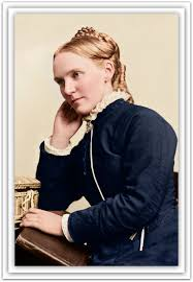
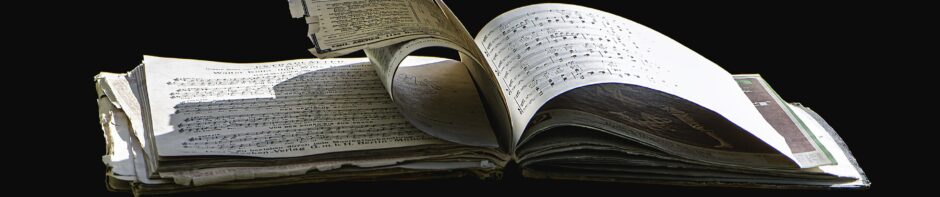
Among the hymns about trusting Jesus (and there are many) is this one by Frances Ridley Havergal (1836-1879): “I Am Trusting Thee, Lord Jesus.” This dear saint has given us some of our most wonderful hymns, and many should be found in every hymnal today. Among her best known and most loved compositions are these: “Take My Life, and Let It Be,” “Like a River Glorious,” “Who Is on the Lord’s Side?” “Thou Art Coming, O My Savior,” and “Thy Life Was Given for Me.” Her hymns are characterized by sweet devotion to the Lord Jesus and joy in the love of God so richly displayed in the gospel.
The late David Calhoun, professor of church history at Covenant Theological Seminary, wrote a wonderful article about this dear lady. It is posted on the C. S. Lewis Institute website. Here are excerpts, including comments about several specific hymns of hers.
Frances Ridley Havergal was born in Astley, Worcestershire, England, on December 14, 1836. She was the youngest of six children born to Jane (Head) and William Havergal, a couple described as “a sterling example of Victorian evangelicalism.” Her middle name was after Nicholas Ridley, a Reformation martyr burned at Oxford in 1555.
Frances’ father was the minister at Astley. In his study, books by John Calvin stood side by side with the works of Thomas Hooker, Jeremy Taylor, and many of the Puritan divines. He was a fine preacher. A member of his congregation said, “Nobody preaches like Mr. Havergal; he teaches me what I want. I tell you what he does: he takes a text, picks it all to pieces, and shows us what is inside it, and then makes us feel it.” William Havergal was also an accomplished musician and composer. His book, “Old Church Psalmody,” was an influential collection of church music.
Frances grew up in “a large, hospitable and stimulating home in which a mix of tutors, curates, students and suitors engaged in lively conversation.” She learned to read by the age of three, and picked up languages listening to the tutorials of her five siblings. When she was nine she helped in teaching a Sunday school class for younger children.
In 1845 Mr. Havergal was appointed rector of St. Nicholas, Worcester, a busy city parish. Frances missed her pleasant country life so much that her father called her “a caged lark.” Her mother died in 1848, when Frances was twelve. Two years later she was sent to a private school for girls in London. There she perfected her French, learned Italian, and studied music, art, and the Bible, large portions of which she memorized. Frances had resisted attempts by her parents to encourage her to confess faith in Christ as her Savior, but joyfully did so soon after her fifteenth birthday. She wrote: “I committed my soul to the Saviour … and earth and heaven seemed bright from that moment.”
In 1851 Mr. Havergal married Caroline Cooke, a friend of his daughter Miriam. Caroline was twenty years younger than her husband and her relationship with Frances, who was very close to her father, became difficult at times.
Frances completed her formal schooling in Düsseldorf, Germany, where her father and stepmother had gone to seek help for his deteriorating eyesight. There she learned German and studied Hebrew, Greek, and Latin.
In 1860 Mr. Havergal, then in failing health, took a very small rural church in Shareshill, a few miles from Wolverhampton. For the next seven years Frances lived with her sister Miriam and her family in Oakhampton House in Astley parish, where she was governess to her two youngest nieces. In December 1867 she went to Shareshill to help care for her father and stepmother. Her father died in 1870, and Caroline eight years later.
Advent Sunday in 1873, when she was eighteen, Frances was confirmed in Worcester Cathedral. It was a turning point in her life.
She knelt before the bishop and followed carefully his words, “Defend, O Lord, this Thy child with Thy heavenly grace, that she may continue Thine forever, and daily increase in Thy Holy Spirit, until she come into Thy everlasting kingdom.” “If ever my heart followed a prayer,” she wrote, “it did then, if ever it thrilled with earnest longing not unmixed with joy, it did at the words ‘Thine for ever.’” That day she wrote a short poem expressing her feeling:
Oh! “Thine forever,” what a blessed thing
To be forever His who died for me!
My Saviour, all my life thy praise I’ll sing,
Nor cease my song throughout eternity.Frances wrote to her sister Maria that she had come to believe that Christ who had “cleansed me had power to keep me clean; so I utterly yielded myself to Him, and utterly trusted Him to keep me.”
Frances Havergal was a gifted young woman. She excelled in languages and played the piano and sang beautifully. She found her life’s work in writing poems, hymns, and devotional books. She produced five “Royal books,” she called them, beginning with “My King or Daily Thoughts for the King’s Children.” These little books, in which she gave a meditation or poem for each day of the month, were a blessing to many. In 1879 the three hundred pastors who attended the annual conference at Spurgeon’s Pastors’ College were given two of Miss Havergal’s “Royal Books” “as a choice and dainty morsel for their spiritual refreshment and quickening.”
Frances also wrote books for children, one of which had the title “Little Pillows.” Just as we want “a nice soft pillow to lay our heads down upon at night,” she wrote, so our hearts want “a pillow too, something to rest upon, some true, sweet word that we might go to sleep upon happily and peacefully.” In a companion book, “Morning Bells,” she presented “little chimes of Bible music” for children to wake up by.
Frances Havergal’s greatest and most lasting work was the writing of hymns. She loved the old hymns of the church and was inspired by the new hymns and gospel songs of Charlotte Elliott (1789-1871) and Fanny Crosby (1820-1915). Frances wrote in a letter to a friend, “I hope you will get to know Charlotte Elliott; it is an honor from God to have had it given her, to write what she has written.”
When someone asked, “Who is Fanny Crosby?” Frances replied, “She is a blind lady, whose heart can see splendidly in the sunshine of God’s love.” Frances wrote a poem called “A Seeing Heart” about her “dear blind sister over the sea.”
Frances herself wrote hundreds of hymns, some of which are loved and sung by Christians around the world. She was concerned to write beautiful and memorable words joined with good music, and she was even more committed to writing hymns that clearly expressed biblical truth. In some of the manuscript copies of her hymns, she attached a scripture reference to each line. Her hymn “Without Christ,” based on Ephesians 2:12, contains a verse for each of its one hundred and twelve lines!
One of her earliest published hymns was inspired by a painting she saw in Germany. It showed Christ suffering on the cross, with the words “All this I did for thee. What hast thou done for me?” Deeply moved, seventeen-year-old Frances jotted down some thoughts that quickly came to her mind. Back home in England, she tried to make them into a hymn, but became discouraged and threw the paper in the fire. It somehow fell out of the grate unburned. Some months later Frances showed it to her father who encouraged her to finish it. She did, and he wrote the music to accompany the words. In the first verse Jesus speaks some words and asks a question:
I gave My life for thee,
My precious blood I shed,
That thou might’st ransomed be,
And quickened from the dead;
I gave My life for thee,
What hast thou given for Me?Many of Frances Havergal’s hymns express her response to the Lord, such as “Jesus, Master, whose I am … let my heart be all Thine own, let me live to Thee alone.” In “O Savior, Precious Savior” she joins her voice with all God’s people in singing, “We worship You, we bless You, to You alone we sing; we praise You, and confess You our holy Lord and King.” “Golden Harps are Sounding” describes Christ’s ascension: “He who came to save us, He who bled and died, now is crowned with glory at His Father’s side. Never more to suffer, never more to die, Jesus, King of glory, is gone up on high.” “Thou Art Coming, O My Savior” anticipates and celebrates Christ’s Second Coming “in Thy beauty all resplendent, in Thy glory all transcendent.”
Frances also wrote “A Worker’s Prayer,” especially for lay helpers in the church:
Lord, speak to me that I may speak in living echoes of Your tone;
As You have sought, so let me seek Your erring children lost and lone.
O teach me, Lord, that I may teach the precious things You do impart;
And wing my words, that they may reach the hidden depths of many a heart.Miss Havergal’s theology has been described as “the theology of the “Pilgrim’s Progress.” She was simple, clear, and compelling in her books and hymns. One Sunday, after a disappointing sermon, she asked the minister, “Oh, why don’t you preach the gospel of Christ?” He answered, “My congregation are well educated and well acquainted with the truths of salvation; if they were Zulus, I should preach differently.” Frances said, “Then I will be a Zulu next Sunday, and just preach at me!” To her delight, a real gospel sermon was the result.
Frances’ circumstances and frail health prevented her from being a foreign missionary, but she found ways to teach the gospel at home. She began a Bible class for working people. She wrote, “I don’t know who will come, few or many; but I want God’s real converting grace poured out, and I want to be enabled so to speak of Jesus that souls may be won to Him.” She supported and assisted various missions, including the Irish Society that provided Bibles and biblical teaching for the people of Ireland. Frances wrote a “Prayer for Ireland,” which began “Gracious Saviour, look in mercy on this island of the west.”
Miss Havergal regularly wrote hymns for the beginning of the new year. For 1874 she wrote “Another year is dawning! Dear Master, let it be, in working or in waiting, another year with Thee.” Later that year she wrote the hymn that became her favorite: “I Am Trusting Thee, Lord Jesus.”
When her mother died, eleven-year-old Frances was devastated. Years later, she wrote, “I did not at all expect her departure and shut my ears in a very hardened way to those who tried to prepare me for it. I did not, would not, see God’s hand in it.” Now she saw God’s hand in her pain. To a friend she wrote, “Pain, as to God’s own children, is, truly and really, only blessing in disguise. It is but His chiseling, one of His graving tools, producing the likeness to Jesus for which we long.”
Frances not only found comfort in God for her suffering but also discovered how it was fitting her to do “the Master’s work.” She wrote in her private journal: “Even in very painful spiritual darkness it has sometimes comforted me to think that God might be leading me through strange dark ways so that I might be His messenger to some of His children in similar distress. One day in a churchyard she found a mother crying while putting flowers on her daughter’s grave. Frances put her hand on the woman’s shoulder and quietly said, “Think of the meeting, not of the parting.”
On Advent Sunday, December 2, 1873, Frances “saw clearly the blessedness of true consecration.” She wrote a “Consecration Hymn” based on the last words of the concluding prayer in the Service of Holy Communion in the “Book of Common Prayer:” “And we humbly beseech Thee, O heavenly Father, so to assist us with Thy grace, that we may continue in that holy fellowship, and do all such good works as Thou hast prepared for us to walk in.” Her hymn begins “Take my life and let it be consecrated, Lord to Thee,” and then goes on to offer everything to God—our time, hands, feet, voice, lips, possessions, intellect, will, heart, and love. It ends, “Take myself, and I will be ever, only, all for Thee”—words that sum up Frances Ridley Havergal’s life and service.
Frances was sometimes overwhelmed by her work—answering fifteen to twenty letters every morning, correcting proofs for her books, and writing hymns and poems. She was not well, and her doctor said that she “ought not to touch a pen.” After reading Exodus 32:26—“Then Moses stood in the gate of the camp and said, ‘Who is on the Lord’s side? Come to me’”—Frances wrote another “consecration hymn.” The first verse begins with a string of questions:
Who is on the Lord’s side? Who will serve the King?
Who will be His helpers, other lives to bring?
Who will leave the world’s side? Who will face the foe?
Who is on the Lord’s side? Who for Him will go?Then comes the resounding answer:
By thy call of mercy, by thy grace divine,
We are on the Lord’s side, Savior, we are Thine.The River Severn, the longest river in Britain, rises in Wales and, during its first fifteen miles, tumbles from a height of two thousand feet to five hundred feet, before making its way for two hundred more miles to Bristol. Frances Havergal lived near the Severn for much of her life. At Astley, her childhood home, a beautiful brook flowed into the river. While in Worcester she walked along the banks of the Severn. When living with her sister Ellen she could see it flowing below the woods “with an extra sparkle and glitter and shine.”
In the River Severn Frances found an illustration of Isaiah 66:12—“For thus saith the Lord: ‘Behold, I will extend peace to her like a river.’” She wrote:
Like a river glorious, is God’s perfect peace,
Over all victorious, in its bright increase;
Perfect, yet it floweth, fuller every day,
Perfect, yet it groweth, deeper all the way.
Stayed upon Jehovah, hearts are fully blest.
Finding, as He promised, perfect peace and rest.During the last months of her life, Frances was preparing a book for the sick and suffering, called “Starlight Through the Shadows.” As her condition worsened, she asked her doctor if he thought she was really going “today,” and he answered “probably.” She said, “Splendid to be so near the gates of heaven.” One of her sisters said, “When thou passest through the waters, I will be with thee.” Frances quickly added, “He must keep His word.”
She whispered to a friend, “There is no bottom to God’s mercy and love.” She asked that the words of 1 John 1:7—“The blood of Jesus Christ His Son cleanseth us from all sin”—be put on her tombstone. Her brother, a minister of the Church of England, sang some hymns, gave her the sacrament of the Lord’s Supper, and said, “You have talked and written a great deal about the King, and you will soon see him in his beauty.” Her sister Maria wrote, “For ten minutes we watched that almost visible meeting with her King.”
Frances died on June 3, 1879. She was forty-two years old. Charles Haddon Spurgeon wrote that “to the great loss of the church,” Frances Havergal “has left these lower choirs to sing above. Miss Havergal, last and loveliest of our modern poets, when her tones were most mellow and her language most sublime, has been caught up to swell the music of heaven.”
By the 1920s, two million copies of her works were in circulation in English and her hymns were sung, and are still known and loved, by Christian people all over the world.
The lyrics are written as a prayer, a prayer that we ought to have at the front of our minds for use on a frequent basis. This kind of simple, almost child-like trust must certainly be the sort of thing Jesus had in mind when He told the disciples that unless we become like little children, we cannot enter the kingdom of God. That’s because the heart of Christianity is neither good works nor good doctrine, though both are essential accompaniments to the regenerate heart and mind. No, the heart of the faith is this loving trust in the Lord Jesus, which should characterize our entire journey heavenward. Every stanza begins with the believer’s wonderful testimony: “I am trusting Thee.” How this must cheer the Lord to hear!
In stanza 1 we declare that we are trusting no one and nothing but Jesus for our salvation, not our hard work in church, not our kindness to our neighbors, not even our prayers and Bible reading … but only Jesus Himself. And this is extraordinarily great and free, and yet infinitely costly to Him
I am trusting Thee, Lord Jesus, trusting only Thee:
Trusting Thee for full salvation, great and free.
In stanza 2 we declare that we are trusting Jesus specifically for pardon, the declaration that all our sins have been paid in full and that we have received that divine pardon, a treasure of inestimable value. Therefore we gladly bow at His feet in gratitude for His grace and tender mercy.
I am trusting Thee for pardon; a Thy feet I bow,
For Thy grace and tender mercy, trusting now.
In stanza 3 we declare that we are trusting Jesus for having made us clean in the Father’s sight, since His crimson blood has washed us and made us pure, not in ourselves, but in His robes of perfect righteousness imputed to us. We have been washed in the blood of the perfect Lamb of God.
I am trusting Thee for cleansing in the crimson flood;
trusting Thee to make me holy, by Thy blood.
In stanza 4 we declare that we are trusting Jesus to guide us, to lead us through the wilderness of temptations and distractions so ever-present in this mortal life. He has promised to supply all our needs according to His limitless riches in grace.
I am trusting Thee to guide me; Thou alone shalt lead,
ev’ry day and hour supplying all my need.
In stanza 5 we declare that we are trusting Jesus for the power which we don’t have within ourselves to be able to hold on to Him. But while we may weaken, He never will, and His promises in His Word must prevail.
I am trusting Thee for power; Thine can never fail.
Words which Thou Thyself shalt gave me must prevail.
In stanza 6 we declare that we are going to continue to trust Him to keep us from falling, which He has promised to do, and that we trust Him to keep us trusting Him all the way to glory.
I am trusting Thee, Lord Jesus; never let me fall;
I am trusting Thee forever, and for all.
We sing this text to the tune BULLINGER, written in 1874 by Ethelbert William Bullinger (1837-1913). He was born in Canterbury, Kent, England, the youngest of five children of William and Mary (Bent) Bullinger. His family traced their ancestry back to Heinrich Bullinger, the Swiss Reformer who served after Zwingli in Zurich.
He is remembered as an ultradispensationalist theologian and writer. Educated at King’s College, London, he became a good organist, singer, and composer. He married Emma Dobson 13 years his senior, and they had two sons. In 1861 he began as Associate Curate to the parish of St. Mary Magdalene, Bermondsey, and was ordained as a priest in the Church of England in 1862. He served as parish curate in Tittleshall until 1866, then Notting Hill until 1869, then Leytonstone to 1870, and finally Walthamstow, until becoming Vicar of the new parish of St. Stephen’s in 1874. He resigned his vicarage in 1888.
In 1867 at the age of only 29, he was clerical secretary of the Trinitarian Bible Society, which he held (except for illnesses) until his death. The Society completed and published a Hebrew version of the New Testament, the Tanakh (introduction to the Hebrew Bible), formation of the Brittany Evangelical mission Society under Pasteur LeCoat, and translation of the Bible into Breton, also producing the first ever Protestant Portugese reference Bible. It also distributed Spanish Bibles in Spain after the 1868 Spanish Revolution. Bullinger, a practiced musician, collected and harmonized untranscribed hymns on his visits to Tremel, Brittany. He wrote many articles, edited a monthly journal “Things to Come.”
Here is a link to the singing of the hymn in London’s Metropolitan Tabernacle.