How much do we owe to the Lord? Certainly not to pay for our salvation. But what about in gratitude for all that He’s done for us? That question is implied in the final phrase of each stanza of Robert Murray McCheyne’s 1837 hymn, “When This Passing World Is Done.” This 19th century Scottish pastor calls us in this hymn to consider this matter as we will at the time our earthly life has come to an end and we stand at the brink of eternity. Only then will we realize more fully how much we owe to the Lord as we look back and see what He has done for us, and as we look forward with the first sense of what an amazing eternity is opening up before us.
People do not associate the name of Robert Murray McCheyne (or M’Cheyne) with hymnody. They are more likely to know of him through the commonly used Bible reading plan he developed for reading through the Scriptures in a year. But among the writings left after his tragically short life (he died at the age of only 29!) is the text of the hymn “When This Passing World Is Done.” While not often found in hymnals today, it deserves a much wider distribution. Its theme of appreciation for God’s goodness in our lives ought to be a prominent characteristic of Christian piety. It is sung at London’s Metropoliotan Church (where Spurgeon was pastor), is included in the Trinity Hymnal and the Trinity Psalter Hymnal (5 stanzas) and has happily been included in the new Getty Music Sing! Hymnal (though only 3 stanzas).
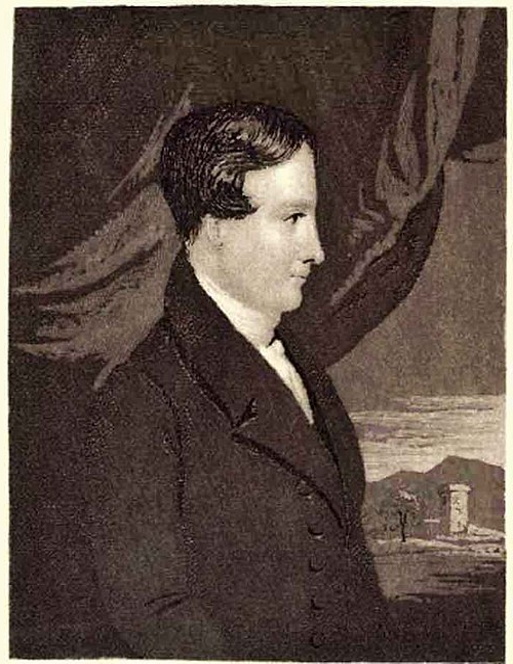
Robert Murray McCheyne (1813-1843), a minister in the Church of Scotland, was born in Edinburgh. He was educated at the university and at the Divinity Hall of his native city, and was assistant to John Bonar at Larbert and Dunipace. A mission among the Jews throughout Europe and in Palestine, along with a religious revival at his church in Dundee, made him feel that he was being called to evangelistic rather than to pastoral work, but before he could carry out his plans he died, on March 25, 1843. McCheyne, though wielding remarkable influence in his lifetime, was still more powerful afterwards, through his “Memoirs and Remains,” edited by Andrew Bonar, which ran into far over a hundred English editions.
At the age of four he knew the characters of the Greek alphabet, and was able to sing and recite fluently. He entered the high school in his eighth year, and matriculated in November, 1827 at the University of Edinburgh, where he showed very versatile powers, and distinguished himself especially in poetical exercises, being awarded a special prize by Professor Wilson for a poem on “The Covenanters.” In the winter of 1831 he began his studies in the Divinity Hall, under Thomas Chalmers and David Welsh. He was licensed as a preacher by the Annan Presbytery on July 1, 1835.
On November 24, 1836 he was ordained to the pastorate of St. Peter’s Church in Dundee. The congregation numbered eleven hundred hearers, and McCheyne addressed himself to the work of the ministry with so much ardor that his health again gave way, and in December, 1838 he was compelled to desist from all public duty. He went to Edinburgh to rest and recuperate. During his absence, his pulpit was supplied by William Chalmers Burns, afterwards the celebrated missionary to China.
In 1839, McCheyne and Bonar, together with two older ministers, Alexander Black and Alexander Keith, were sent to what was then known as Palestine on a mission to inquire about the condition of the Jews living there. Upon their return, their official report for the Board of Mission of the Church of Scotland was published as “Narrative of a Visit to the Holy Land and Mission of Inquiry to the Jews.” This led subsequently to the establishment of missions to the Jews by the Church of Scotland and by the Free Church of Scotland. Islay Burns, brother and biographer of William Chalmers Burns, succeeded McCheyne as minister of St. Peter’s.
McCheyne was away from April 12 to November 6, 1839. On his return he resumed his work at Dundee with renewed energy. In the autumn of 1842, he visited the north of England on an evangelistic mission, and made similar journeys to London and Aberdeenshire. He preached in the morning and afternoon of March 12 to his own people in Dundee, and in the evening preached at Ferry. Two days afterwards was seized with typhoid fever, which he had contracted in the course of visitation, and died on March 25, 1843. His parents agreed to the wish of his congregation that McCheyne be buried in the graveyard beside St Peter’s Church in Dundee, rather than in the family’s own burial-ground in Edinburgh. He was buried on Thursday, March 30, 1843, with an estimated 7000 people attending the funeral. An imposing monument marks his grave.
McCheyne was a preacher, a pastor, a poet, and wrote many letters. He was also a man of deep piety and a man of prayer. He died exactly two months before the Disruption of 1843 that divided Presbyterians in Scotland. This being so, his name was subsequently held in high honor by all the various branches of Scottish Presbyterianism, though he himself held a strong opinion against the Erastianism which led to the Disruption. Bonar records, “And when, on 7 March of the following year (i.e. 1843), the cause of the Church was finally to be pleaded at the bar of the House of Commons, I find him writing: ‘Eventful night this in the British Parliament! Once more King Jesus stands at an earthly tribunal, and they know Him not!’”
Although widely believed to have been engaged to be married to Jessie Thain at the time of his death (and once, some ten years earlier, to Margaret Maxwell), largely owing to Smellie’s popular biography, recent scholarship has disproved both of these claims. Perhaps no minister in the Church of Scotland is better remembered for the saintliness of his character, the anxious devotion which influenced the whole of his short ministry, and the success which everywhere accompanied his efforts as a preacher of the Gospel. He was a diligent Bible student and a good classical scholar. He learned to read Greek when he was but a boy, and he could carry on a conversation in Hebrew. He had fine poetical, artistic, and musical gifts. He trained his congregation in psalmody, and his hymns are the property of all the Churches.
Not long after his death, his friend Andrew Alexander Bonar edited his biography which was published with some of his manuscripts as “The Memoir and Remains of the Rev. Robert Murray M’Cheyne.” The book went into many editions. It has had a lasting influence on Evangelical Christianity worldwide as it has remained in print to this day. As already noted, McCheyne designed a widely used system for reading through the Bible in one year. The plan entails reading the New Testament and the Psalms through twice a year, and the Old Testament through once. This program was included (in a slightly modified form) in “For the Love of God” by D. A. Carson and is recommended by several Bible publishers, such as the English Standard Version and the New English Translation. It is even available now as an App on digital devices. The former McCheyne Memorial Church in Dundee is named after him.
The lyrics for this hymn, “When This Passing World Is Done,” were written by McCheyne in 1837 at the young age of 23, six years before his death. It was a poem to which he gave the title “I Am Debtor.” It is astounding to find such mature thought about such matters from one so young. The Getty Music Sing! Hymnal includes this quote from McCheyne regarding this subject. “Soon the Bridegroom will come, and we shall be with Him, and like Him, and God shall wipe away all tears from our eyes. I burst through all the cobwebs of present things, and His Spirit anointing my eyes, look at Jesus as one beside me. Soon we shall see Him as He us, and then our trials shall be done. Remember that Jesus for us is all our strength in an ungodly world.”
Though the Bible only gives us hints, and many of those are in the symbolic descriptions in the book of Revelation, we rightly look forward to many wonderful things about our eternal life in the new earth. We will behold be beauty in the new creation that vastly surpasses anything we have seen in our travels around this world. We will experience friendships that will never be marred by jealousy or misunderstanding. We will never again have to overcome pain and sadness from loss or injury. We will renew and deepen connections, not only with friends and family from this life, but we will also become cherished acquaintances with many of “the greats” from church history. Who can imagine what it will be like to spend a relaxed afternoon in a fragrant garden visiting with Abraham, with Daniel, with Paul, with Augustine, with Calvin, with Spurgeon? Certainly at the top of the list will be seeing Jesus, no longer through a glass dimly but face to face, and singing with the multitude of saints and angels, “Worthy is the Lamb!”
Unlike many hymns which address the Lord, in this text we are speaking to ourselves, longing that we might come to appreciate how much we owe to our King. McCheyne invites us in this hymn to anticipate another of the joys of heaven. That is to appreciate as never before just how much we owe our Savior! If there is gratitude in our hearts now, how much greater will that be when, from heaven’s vantage point, we see His goodness in greater detail?
Stanza 1 sets the central theme before us. Only after this passing world is done will we fully know how much we owe Him. That’s something to look forward to each day as our final day approaches.
When this passing world is done,
When has sunk yon glaring sun,
When we stand with Christ on high
Looking o’er life’s history,
Then, Lord, shall I fully know,
Not till then, how much I owe.
Stanza 2 moves to the first of several particulars. When God’s judgment comes on the wicked for their cosmic treason in unbelief, when they cry out like the people of Noah’s day when it was too late, after the door of safety has been shut, when “the rocks and hills” begin to fall and they find themselves on the brink of hell’s “fiery deluge,” what relief will be ours when we realize that only because of His sovereign electing grace, we have been spared that eternal fate.
When I hear the wicked call
On the rocks and hills to fall,
When I see them start and shrink
On the fiery deluge brink,
Then, Lord, shall I fully know,
Not till then, how much I owe.
Stanza 3 informs us of one of the glories of heavenly life which we may not have yet recognized. It is that we will not only “stand before the throne, dressed in beauty not my own” (justification by imputation of Christ’s righteousness to my account) and “when I see Thee as Thou art” (Jesus’ unveiled glory, like that on the Mount of Transfiguration and in John’s vision on the Lord’s Day in first chapter of Revelation), but the unimaginable wonder of being able to “love Thee with unsinning heart.” Even our love for Jesus now is marred by sin’s presence. But then we’ll be able to appreciate how much we owe in our ability to worship with such pure hearts.
When I stand before the throne,
Dressed in beauty not my own,
When I see Thee as Thou art,
Love Thee with unsinning heart,
Then, Lord, shall I fully know,
Not till then how much I owe.
Stanza 4 alerts us to the magnificence of that heavenly worship we will hear once that day has come. John had a brief experience of it in the vision he recorded in Revelation. He described the intensity, beauty, power, volume, sweetness, and majesty of worship, the likes of which we will never know this side of heaven. But as we will revel in it then, we will fully know how much we owe Him for the privilege of not only hearing, but of joining in that grand chorus of praise.
When the praise of heav’n I hear,
Loud as thunders to the er,
Loud as many waters’ noise,
Sweet as harp’s melodious voice,
Then, Lord, shall I fully know,
Not till then, how much I owe.
Stanza 5 moves to the climax, including a slight variant in the final line, which had been repeated in each of the previous four stanzas. Here we acknowledge that the only reason all this will be true for any of us is God’s having chosen us, not for any good in us (there is none!), to waken us to flee from the wrath to come, and having united us to Christ by our being safely “hidden in the Savior’s side” and “by the Spirit sanctified.” Because all of that is true, based on the faithfulness of a covenant-keeping God, we ask Him now to teach us while we’re here how to show that love to others, that they may also see “by my love, how much I owe.”
Chosen not for good in me,
Wakened up from wrath to flee
Hidden in the Savior’s side,
By the Spirit sanctified,
Teach me, Lord, on earth to show
By my love, how much I owe.
With a 7.7.7.7.7.7. meter, there are more than ten possible tunes to choose from for the hymn, including DIX, REDHEAD, WELLS, and TOPLADY. The Trinity Hymnal selected the 1867 tune MOUNT ZION by Sir Arthur Sullivan. A newer option from the SING! Hymnal is one composed for McCheyne’s text in 2025 by Keith Getty.
Here is a link to the hymn as found to the tune MOUNT ZION in the Trinity Hymnal.