How much do we owe to the Lord? Certainly not to pay for our salvation. But what about in gratitude for all that He’s done for us? That question is implied in the final phrase of each stanza of Robert Murray McCheyne’s 1837 hymn, “When This Passing World Is Done.” This 19th century Scottish pastor calls us in this hymn to consider this matter as we will at the time our earthly life has come to an end and we stand at the brink of eternity. Only then will we realize more fully how much we owe to the Lord as we look back and see what He has done for us, and as we look forward with the first sense of what an amazing eternity is opening up before us.
People do not associate the name of Robert Murray McCheyne (or M’Cheyne) with hymnody. They are more likely to know of him through the commonly used Bible reading plan he developed for reading through the Scriptures in a year. But among the writings left after his tragically short life (he died at the age of only 29!) is the text of the hymn “When This Passing World Is Done.” While not often found in hymnals today, it deserves a much wider distribution. Its theme of appreciation for God’s goodness in our lives ought to be a prominent characteristic of Christian piety. It is sung at London’s Metropoliotan Church (where Spurgeon was pastor), is included in the Trinity Hymnal and the Trinity Psalter Hymnal (5 stanzas) and has happily been included in the new Getty Music Sing! Hymnal (though only 3 stanzas).
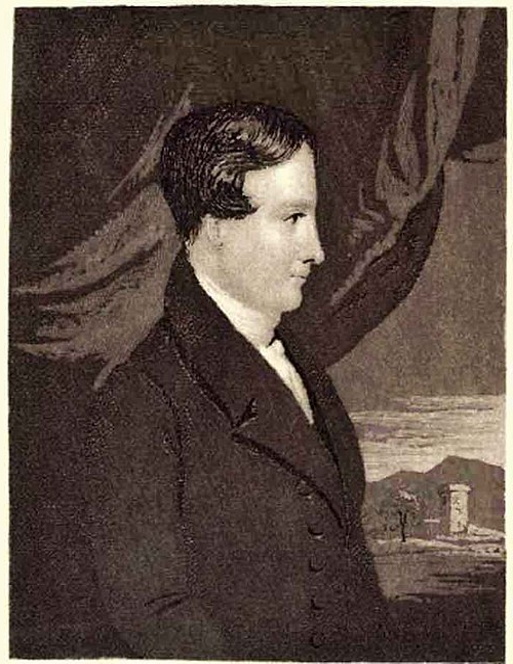
Robert Murray McCheyne (1813-1843), a minister in the Church of Scotland, was born in Edinburgh. He was educated at the university and at the Divinity Hall of his native city, and was assistant to John Bonar at Larbert and Dunipace. A mission among the Jews throughout Europe and in Palestine, along with a religious revival at his church in Dundee, made him feel that he was being called to evangelistic rather than to pastoral work, but before he could carry out his plans he died, on March 25, 1843. McCheyne, though wielding remarkable influence in his lifetime, was still more powerful afterwards, through his “Memoirs and Remains,” edited by Andrew Bonar, which ran into far over a hundred English editions.