
As vacation time approaches, we find ourselves increasingly looking forward to a break from the demands of our job. And we also find ourselves increasingly looking forward to the sights of some beautiful scenery where we can relax and enjoy the beautiful sights of nature, whether it’s the sands and surf at a beach resort, the spectacular fall colors of maples and aspens, or the vistas of lofty mountain ranges, enjoyed with family members, some of whom we’ve not seen for quite some time.
The only unpleasant thing about such vacations is that they must too soon come to an end. But what about the heavenly destination God has promised us in Christ, where not only will there be perfect rest from our labors and indescribably beautiful sights, but reunion with family and friends who have gone before us, and most wonderfully the thrill of seeing Jesus, no longer through a glass darkly, but face to face? The Bible indicates that not only will this be a productive eternity, not one of inactivity, but also one that will never end, but will, to the contrary become more and more wonderful as the ages roll on.
Some of our hymns misrepresent what the Bible tells us about heaven, leaving folks with the impression that we will spend eternity lounging on soft billowy white clouds with our harps, halos, and angelic wings. How boring! When Jesus returns, bringing heaven to earth, He will usher in an age of joyful industriousness far surpassing the creation ordinances of Eden’s paradise. We will find new ways to use our spiritual gifts, with the skills He has given us in this life. Far from being a boring eternity of an unending church service, we will be thrilled to find increasing ways to serve our fellow saints and our glorious Savior.
Most Christians still think of that eternal heavenly destination as a place somewhere “out there,” and that this earth will perish. But no, the Bible tells us that heaven He’s planned for us will be right here on this planet. It will be cleansed from all the effects of sin in human nature as well as in nature around us. The prophecies of renewed creation in t e latter chapters of Isaiah will find their fulfilment when Jesus returns to bring final defeat to the forces of evil and to make this world “better than Eden,” as Nancy Guthrie has written in her book by that title.
And what about friendships? Here in this life, most of us can count on one (or maybe two) hands the number of people with whom we have a special friendship, people who understand us and care for us, and with whom we often enjoy relaxed time together. These are people who will bring us joy just at the thought of seeing them and conversing with them, or perhaps engaging in some common interest or activity. Will we lose that in heaven? The God who is a social being (three persons who have enjoyed intimate friendship with one another from eternity) who created us as social beings (as we find Adam to be incomplete until God brought Eve to him) must certainly plan for us to find even greater friendships in the new earth existence.
Not only did God make us in His image as social beings; He also made us to be creative beings. He gave Adam the charge to cultivate the earth and its resources, with the mental powers and industriousness God built into him. Adam made little progress in that commission before sin so damaged him and his posterity. But even in our fallen sinful condition, consider how that creativity has been expressed in architecture, landscaping, health, literature, sports, discovery in nature (even into space!), and the arts. Are we to lose that creativity the new heavens and the new earth? Surely not! We can’t begin to imagine what joys await us to be developed and expanded in the perfection of that world to come.
Randy Alcorn has made heaven a focus of his ministry. Having researched the Bible on the subject of our eternal home, he has taught and written extensively on this theme that should be a regular focus of meditation for believers. His “magnum opus” is a 533 page volume simply titled “Heaven,” published in 2004. He expands what the Bible records about heaven, challenging the reader to take seriously the language of Scripture. In this, and his other books, he also shares his research into the writings of others, from Charles Spurgeon to Anthony Hoekema.
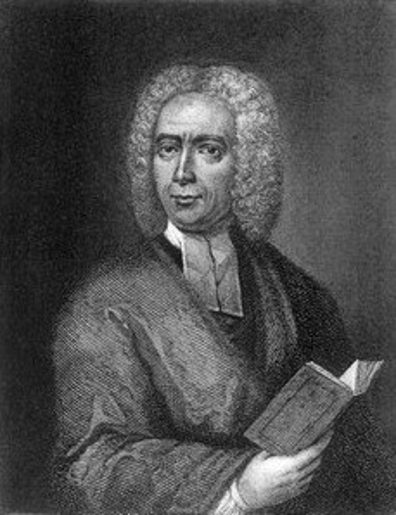
Here’s a hymn about our future joy that may not be familiar to most. “There Is a Land of Pure Delight” was written in 1707 early in the hymn-writing years of “The Father of English Hymnody,” Isaac Watts (1674-1748). The hymn develops the theme of longing for heaven by comparing it to the Israelites longing for the promised land of Canaan across the Jordan River. It has a clear biblical connection to verses like Deuteronomy 4:22, “You are about to cross over and take possession of that good land.” The imagery of crossing the river into heaven was also part of John Bunyan’s classic “Pilgrim’s Progress.” We recall also Deuteronomy 34:1, where we read that God took Moses to the top of Mount Nebo and showed him all the land opposite Jericho.
The hymn was originally titled “A prospect of heaven makes death easy.” Tradition notes that Watts wrote the lyrics during an illness in the summer of 1707, drawing inspiration from views over Southampton Water. Today, believers facing death from disease or age can find inner peace and joy by looking ahead to that “Land of Pure Delight.” Days of pain and weakness pose a real threat to those living with a terminal illness. Great relief can be found by remembering that destination which God has promised to those who are in Christ. Rather than focusing on the pills and pains that are so temporary, at such times we need to set out mind on things above rather than earthly things (Colossians 3:1-4).
An English Congregational minister, Watts was something of a renaissance man with his multiple skills evident in theology as well as in science, education, logic, and philosophy. He is credited with some 750 hymns, including some that are found in almost every hymnal today: “When I Survey the Wondrous Cross,” “Joy to the World,” and “Our God, Our Help in Ages Past.” Watts was born in Southampton, Hampshire, England, in 1674 and was brought up in the home of a committed religious nonconformist (Independent, non- Anglican). His father, also Isaac Watts, had been incarcerated twice for his views.
Watts displayed a propensity for rhyme from an early age. He was once asked why he had his eyes open during prayers, to which he responded:
A little mouse for want of stairs
ran up a rope to say its prayers.
He received corporal punishment for this, to which he cried:
O father, father, pity take
And I will no more verses make.
Because he was a nonconformist, Watts could not attend Oxford or Cambridge. These universities were restricted to Anglicans, as were government positions at the time. He went to the Dissenting Academy at Stoke Newington in 1690.Much of the remainder of his life centered on that village, which is now part of Inner London.
Following his education, Watts was called as pastor of a large independent chapel in London, Mark Lane Congregational Chapel, where he helped train preachers, despite his poor health. He held religious opinions that were more nondenominational or ecumenical than was common for a nonconformist Congregationalist. He had a greater interest in promoting education and scholarship than preaching for any particular sect.
Watts took work as a private tutor and lived with the nonconformist Hartopp family in Stoke Newington. . Through them, he became acquainted with their immediate neighbors Sir Thomas Abney and Lady Mary. He eventually lived for a total of 36 years in the Abney household, most of the time at Abney House, their second residence. Lady Mary had inherited the manor of Stoke Newington in 1701 from her late brother Thomas Gunston.
On the death of Sir Thomas Abney in 1722, his widow Lady Mary and her unmarried daughter Elizabeth moved all her household to Abney House from Hertfordshire, and she invited Watts to continue with them. He particularly enjoyed the grounds at Abney Park, which Lady Mary planted with two elm walks leading down to an island heronry in the Hackney Brook, and he often sought inspiration there for the many books and hymns that he wrote.
Watts lived at Abney Hall in Stoke Newington until his death in 1748; he was buried in Bunhill Fields. He left an extensive legacy of hymns, treatises, educational works, and essays. His work was influential amongst nonconformist independents and religious revivalists of the 18th century, such as Philip Doddridge, who dedicated his best-known work to Watts.
Sacred music scholars Stephen Marini, Denny Prutow and Michael LeFebvre describe the ways in which Watts contributed to English hymnody and the previous tradition of the Church. Watts led the change in practice by including new poetry for “original songs of Christian experience” to be used in worship, according to Marini. The older tradition was based on the poetry of the Bible: the Psalms. Psalms had been sung by God’s people from the time of King David, resulting after many years with the assembling of the complete book of 150 Psalms in a form appropriate for singing by the Levites, during Temple sacrifices at the time. The practice of singing Psalms in worship was continued by Biblical command in the New Testament Church from its beginnings in Acts through the time of Watts, as documented by Prutow. The teachings of 16th century Reformation leaders such as John Calvin, who translated the Psalms in the vernacular for congregational singing, followed this historic worship practice. Watts was not the first Protestant to promote the singing of hymns. However, his prolific hymn writing helped usher in a new era of English worship as many other poets followed in his path.
In addition to his work on congregational songs, Watts wrote a textbook on logic which was particularly popular; its full title was, “Logick, or The Right Use of Reason in the Enquiry After Truth With a Variety of Rules to Guard Against Error in the Affairs of Religion and Human Life, as well as in the Sciences.” This was first published in 1724, and it was printed in twenty editions. Watts wrote this work for beginners of logic, and arranged the book methodically. He divided the content of his elementary treatment of logic into four parts: perception, judgment, reasoning, and method, which he treated in this order. Each of these parts is divided into chapters, and some of these chapters are divided into sections. The content of the chapters and sections is subdivided by the following devices: divisions, distributions, notes, observations, directions, rules, illustrations, and remarks. Every bit of the content of the book comes under one or more of these headings, and this methodical arrangement serves to make the exposition clear. Isaac Watts’s “Logic” became the standard text on logic at Oxford, Cambridge, Harvard, and Yale, being used at Oxford for well over 100 years. Watts followed the “Logic” in 1741 by a supplement, “The Improvement of the Mind.” This also went through numerous editions.
The lyrics are set in the literary form of a soliloquy. We find this in Psalm 103, where we sing to ourselves, “Bless the Lord, O my soul.” We need to talk to ourselves like this to re-orient our thinking to more consistently and constantly be walking by faith rather than by sight, to be walking with our minds and hearts focused on what God has promised rather than on what we’re feeling at that moment.
Stanza 1 directs our attention to what god has promised in the new heavens and new earth: “a land of pure delight.” We appreciate the word “delight” as something that is beautiful and satisfying in every dimension. It is defined here as “pure,” unstained by the effects of sin and the fall. And Watts adds three particulars to that modifier. First, “saints immortal reign,” having inherited their ultimate privilege of sitting in royalty over the new creation. Second, “infinite day excludes the night,” where there is no more weariness requiring rest. Third, “pleasures banish pain,” as the joy of our salvation will find its fullest expression, as there will be no more disease or disappointment.
There is a land of pure delight,
Where saints immortal reign;
Infinite day excludes the night,
And pleasures banish pain.
Stanza 2 brings more of the delight that awaits us in that day and in that place. Here it is in the imagery of and everlasting spring. We picture not only the beauty of new bright green leaves on the trees and flowers in the field, but also the anticipation of the bleakness of winter being forever gone. The imagery of a “narrow sea” dividing our present sin-polluted life from the perfections of the heavenly land beyond. What an encouragement in the midst of all our present woes to remember what lies on the other side of that divide.
There everlasting spring abides,
And never with’ring flow’rs;
Death, like a narrow sea divides
This heav’nly land from ours.
Stanza 3 adds more detail to the images of our future home. On the other side of that “narrow sea” that swells like a flood lie “sweet field” “dressed in living green.” Remember how your lawn looked so brown and lifeless in winter? And then how beautiful it was as the new grass sprouted as a soft vivid green carpet. That was what the Israelites must have seen as they left behind the brown, dusty wilderness and approached the lush green of the Jordan valley with the promised land of Canaan lying just beyond. That’s the picture we need to paint in our mind as age and disease bring us closer to our Jordan crossing.
Sweet fields beyond the swelling flood
Stand dressed in living green;
So to the Jews old Canaan stood,
While Jordan rolled between.
Stanza 4 helps us by facing the reality of human fears in the face of death. We were made to live; death was not part of the design. Even though Jesus has conquered the power of death for believers, we still recoil in the presence of the enemy: death. It is a brutal, monstrous thing that causes pain, brings sadness, and separates our souls from our bodies. It is NOT natural to die; it is the curse of sin. And so when we draw near that “narrow sea,” it’s not surprising that we “tim’rous mortals start and shrink,” as Christian did in “Pilgrim’s Progress” when he came to the river separating him from the Celestial City. We long to be with the Lord, but we still “fear to launch away.”
But tim’rous mortals start and shrink
To cross this narrow sea;
And linger, shiv ‘ring on the brink,
And fear to launch away.
Stanza 5 expresses the deepest longing of our hearts. We want to be free from those fears and anxieties, delivered from those “gloomy doubts” that rise within as death approaches. We want to be able “see the Canaan that we love, with unbeclouded eyes.” In this in-between-time, we shrink from our mortality at the same time we look forward to our deliverance. One day the sorrows of approaching death dominate our emotional framework, and the next we are filled with joyful anticipation at the nearness of heaven and heaven’s Savior. How wonderful when these struggles will finally be past.
O could we make our doubts remove,
Those gloomy doubts that rise,
And see the Canaan that we love,
With unbeclouded eyes.
Stanza 6 brings these conflicting emotions to a conclusion in the primary and foundational attitude of our heart, an attitude that we long to see become our default setting on this side of glory. Watts takes us to the account of Moses as God took him up to the top of Mount Nebo from which he could “view the landscape” across the Jordan River. The imagery of the river matches the boundary between this life and the next, the death which we must each experience in order to reach heaven’s promised land. And so Watts’s hymn tells us that we need to climb above our feelings and fears and look by fsith at what God has promised us. If we can do that (and we can, with the help of the Holy Spirit), then “death’s cold flood” will no longer “fright us from the shore.”
Could we but climb where Moses stood
And view the landscape o’er,
Not Jordan’ s stream, nor death’s cold flood,
Should fright us from the shore.
I am writing this study at a time when I have been diagnosed with pancreatic cancer. After a failed surgical attempt to remove the tumor on my pancreas (the “Whipple” procedure had to be aborted hallway through, because the tumor involved major blood vessels off the aorta), I am pursuing all the medical options available to me, including chemotherapy and the newly approved medication daraxonrasib (“targeted” therapy that goes after the KRAS mutation in pancreatic cancer cells).
And so in the midst of my dealing medically with my cancer, I am also dealing with the psychological and spiritual dimensions of this final battle. As Ben Sasse has said (as he deals with his pancreatic cancer), “Cancer sucks!” I have a new favorite shirt that says, “My God is stronger than pancreatic cancer.” I believe that with all my heart. But I still don’t want what lies ahead as the disease progresses in my body.
Finding this hymn from Isaac Watts has come at a good time for me. I want to spend more time thinking about that “land of pure delight where saints immortal reign.” I want to walk more by faith (God’s promises) and less by sight (my emotions). I want people to see my weakness and at the same time see My Savior’s strength.
The hymn is set in Common Meter (C.M.), and so can be sung to a great number of tunes. The 1990 “Trinity Hymnal” has preserved the tune MEDITATION, which is also used for “There Is a Green Hill Far Away.” This 1890 tune by John Henry Gower (1855-1922) has appeared in almost 200 different hymnals! Born in Rugby, Warwickshire, England, Gower became an assistant organist at Windsor Castle at age twelve. After studying at Oxford and in Germany, he served as organist and music director at Trent College in Nottingham starting in 1876.
He moved to the United States in 1887 and became involved in the mining industry in Colorado. He continued his musical career in Denver, Colorado, serving at the Cathedral of St. John in the Wilderness (St. John’s Cathedral), Central Presbyterian Church, and Unity Church.
He is remembered especially for the tunes GOWER’S LITANY and MEDITATION, both from 1890.
His output includes Anglican and Episcopalian church music, anthems, service settings, and organ pieces characterized by Victorian craftsmanship, four-part choral writing, and warm, late-Romantic harmonies.
Here is a link to the MEDITATION tune with Watts’s text.