
We all remember the famous quote from the opening line of the English writer Elizabeth Barret Browning’s 1850 love poem in her “Sonnets from the Portugese,” as it begins, “How do I love thee? Let me count the ways.” We might ask that question regarding the Scriptures, “How many ways do you stir my heart with love for thee? Let me count the ways.” And then we would launch into a lengthy list of images and qualities about God’s Word that make the Bible so wonderful to our soul.
As Reformed believers, out initial tendency might be to think of those qualities related to the three “I”-s of the Bible: its inspiration, its infallibility, and its inerrancy. “Inspiration” – the Bible is marvelous since it is God-breathed. “Infallibility” – It is wonderful since it does not fail to accomplish what God has sent it to do. “Inerrancy” – And it is impressive since it is absolutely true, without error, in all that it says. We are instructed in these qualities from passages like 2 Timothy 3:16-17, 2 Peter 1:21, and John 17:17.
But all biblical doctrine is not only admirable and awesome in the truths explained. It is also practical and devotional in the joyful response such doctrine elicits from our hearts. As some have expressed it, a right understanding of theology will always lead to doxology, as mind and heart are united in the worship of God. And that is abundantly so in the doctrine of Scripture. God’s Word, like everything about Him, is glorious.
We have biblical incentive for considering the glories of God’s Word in Psalm 119. In 176 verses, each of which has two lines, we sing 352 times of the scripture’s beauty and life transforming power. A spiritually alive imagination will be able to propose quite a list of those images that make God’s Word so attractive and compelling. It’s like a sermon with one point, and 352 different brief expositions of that one point!
Edwin Hodder (1837-1904) has done something like that with his 1863 hymn, “Thy Word Is Like a Garden, Lord.” In three stanzas, he described God’s Word as flowers in a garden, as jewels in a mine, as stars in the heavens, and as weapons in an armory. These are not just images of beauty; they are also images of life-changing power. It reminds us of the words in Hebrews 4:12 that the Word of God is living, and active.
Hodder was born at Stains, Middlesex, the second son of Henry and Jane Elizabeth Hodder. His first wife was Edith Seymour Bankart, born in 1842. They married in Hamel Hampstead in 1869. In 1870 she gave birth to a son, Edwin Percy, who died in Worthing in 1941. A second son was born in 1871 who was named Frederick Bankart Hodder. He died in Worthing in 1958 aged 87. Sadly Edith died not long after that birth in 1871 and was buried in Kensel Green Cemetery. Edwin’s second marriage was at St Mary, Willesden. He married on Elizabeth Jones on April 19, 1876. Children of that second marriage were: Harley Rayner in 1877, Edward (Edwin) Bertrum in in 1879, Frank Stewart in 1880, Francis Edwin in 1883, Bertha Louise in 1885, Constance Evelyn in 1887, Edwin Arnold in 1888, and Philip Martland in 1890.
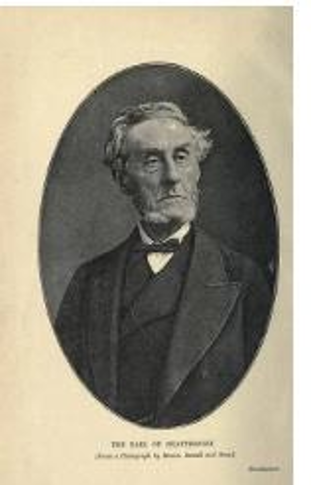
Hodder went to New Zealand with a group as a young man as part of an experiment in pioneer society (1856-61). On his return to England he became a Civil Servant, retiring in 1897. Hodder’s years in New Zealand led to the production of “Memories of New Zealand Life” (1862), the first of a great many publications. He was a prolific author on numerous topics, particularly travel and geography (“All the World Over,” 1875-76), history (“The History of South Australia,” 1893), biography (“The Life and Work of the Seventh Earl of Shaftesbury, KG,” 1886), and religion (“The Way and the Life,…”). The author of children’s books, he also wrote a number of hymns for children. In 1863 he published “The New Sunday School Hymn Book,” and in 1868 a “New and Enlarged” edition of the same. To this additional collection he contributed 27 hymns.
“Thy Word Is Like a Garden, Lord” was originally entitled “Holy Scripture,” and was first published in his 1863 work, “The New Sunday School Hymn Book,” which contained 23 of his own hymns. The song consisted of seven four-line stanzas, but most books today use six of them to form three eight-line stanzas. In 1897, he retired to Henfield in Sussex, England, where he produced his final volume, “The Life of a Century,” in 1900, before he died at Chichester in Sussex on March 1, 1904.
Stanza 1 refers to God’s word as both a garden and a mine. The word “garden” suggests a lovely place with beautiful flowers, as in Eden (Genesis 2:8-16). The Bible is certainly a thing of great beauty coming from the one who is the source and ideal of all beauty. However, it is more than just something nice to look at. The idea of plucking a lovely cluster there suggests that there are benefits that we can receive from God’s word (Psalm 103:1-5). Furthermore, these benefits can be more lasting than the passing beauty of flowers because God’s word is also like a deep mine with wonderful jewels, and therefore is more precious than gold (Psalm 19:7-10).
Thy Word is like a garden, Lord,
With flowers bright and fair;
And ev’ry one who seeks may pluck
A lovely cluster there.
Thy Word is like a deep, deep mine,
And jewels rich and rare
Are hidden in its mighty depths
For ev’ry searcher there.
Stanza 2 refers to God’s word as a light, reminding us that God created the starry host in the sky to help give light at night (Genesis 1:14-18). And just as the stars can be used at night to help guide travelers in the direction they wish to go, so God’s word gives light to guide us on our way (Psalm 119:105). In addition, God’s word also provides the armor and weapons that we need to fight the good fight of faith as soldiers of the Lord while we look to its light on our journey (1 Timothy 6:12; 2 Timothy 2:3-4).
Thy Word is like a starry host—
A thousand rays of light
Are seen to guide the traveler,
And make his pathway bright.
Thy Word is like an armory
Where soldiers may repair
And find, for life’s long battle-day
All needful weapons there.
Stanza 3 refers to God’s word as a sword. Because of all these blessings and benefits of God’s word, we should love it (Psalm 119:97). But most of all, we need to remember that it is “the sword of the Spirit” which God has given us for this battle (Ephesians 6:10-17). Therefore, we can and must use it to wage the good warfare by which we can gain the victory of faith (1 Timothy 1:18, 1 John 5:4).
O may I love Thy precious Word;
May I explore the mine;
May I its fragrant flowers glean,
May light upon me shine.
O may I find my armor there,
Thy Word my trusty sword!
I’ll learn to fight with ev’ry foe
The battle of the Lord!
The tune is known by several names: BETHLEHEM, SERAPH, EVANGEL, or OLD CAROL. It is attributed to Gottfried Wilhelm Fink (1783-1846). It is believed that it may possibly have been an old English melody adapted by Fink and published by him in 1841 or 1842. It was first used as a hymn tune with the hymn “While Shepherds Watched Their Flocks” in the 1874 “Church Hymns”by Sir Arthur S. Sullivan (1842-1900).
Fink was a German composer, music theorist, poet, and a Protestant clergyman. From 1804 until 1808 Fink studied theology at the University of Leipzig, where he joined the Corps Lusatia. There he made his first attempts at composition and poetry. Most of his song compositions are attributed to this period. From 1811 he held the office of vicar in Leizig for some years, where he also founded an educational institution which he led until 1829. From the beginning of the 19th century he worked for the “Allege meine musikalische Zeitschrift” (“General musical magazine”). In 1827 he became the magazine’s editor-in-chief, a position he held for 15 years.
From 1838 Fink worked as a lecturer at the University of Leipzig. In 1841 he became a Privatdozent of musicology at the university. In the same year he became a member of the Prussian Academy of Arts in Berlin and a year later he was appointed the music director of the university. He was highly appreciated throughout his life as a music theorist and composer. Numerous honors and awards were bestowed on him at home as well as abroad. In 1838, the Faculty of Philosophy at Leipzig University awarded him an honorary doctorate.
His compositions consist mainly of songs, song collections, and ballads. He wrote the lyrics for most of his song compositions himself. He also made a name for himself as the author of important works on music theory and music history. However, he was best known as the editor of the “Musikalischer Hausschatz der Deutschen” (“Musical house treasure of Germans”), a collection of about 1,000 songs and chants, as well as the “Deutsche Liedertafel” (“German song board”), a collection of polyphonic songs sung by men.
Here is a link to listen to the music, as played on piano.